Fermentation salt percentage for beets
Ferment beets at 2.5 percent salt, measured against the combined weight of vegetable and water, for 7 to 21 days at room temperature. For 1,000 grams of vegetable plus water that is 25 grams of salt. Keep everything under the brine: anything above the surface is where mould grows.
The salt, by weight
| Vegetable plus water | Salt | Days |
|---|---|---|
| 500 g | 12.5 g | 7 to 21 |
| 1000 g | 25 g | 7 to 21 |
| 2000 g | 50 g | 7 to 21 |
| 3000 g | 75 g | 7 to 21 |
Why the percentage is of the total
In a dry salted ferment like sauerkraut there is no added water at all: the salt draws brine out of the vegetable itself. Taking the percentage against the combined weight of vegetable and any added water therefore gives one number that works whether you are salting cabbage dry or covering carrots in brine. It is also what makes a ferment repeatable, which matters because the only reliable feedback loop here is tasting it a week later.
Gear that fits these numbers
What this job needs
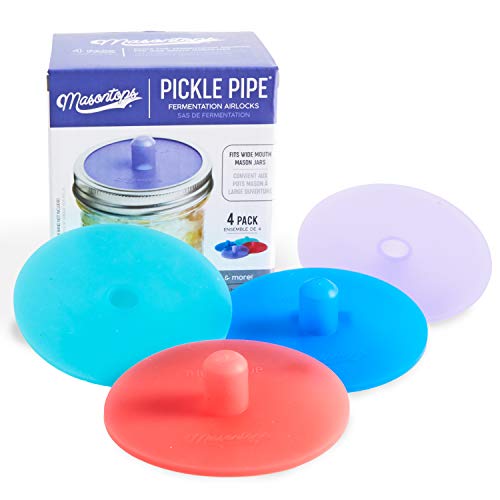
Masontops Pickle Pipes Airlock Fermentation Lids
A one piece silicone airlock with nothing to disassemble, which is why these survive in kitchens where three part airlocks get lost.

SOLIGT Glass Fermentation Weights, 4 Pack
Anything above the brine grows mould. A weight is the cheapest insurance against losing a whole jar.

Etekcity 0.1 Gram Food Scale with Bowl
Tenth gram resolution matters the moment you weigh salt as a percentage: 2 percent of 800 grams is 16 grams, and 1 gram resolution is an 6 percent error.
Prices when last checked. They change often.
Frequently asked questions
How much salt for fermenting beets?
2.5 percent of the combined weight of vegetable and water. For 1,000 grams total that is 25 grams of salt. Percentage of the total, not of the water alone, is what makes a ferment repeatable, because the vegetable itself carries most of the water in a dry salted ferment like sauerkraut.
How long does it take?
7 to 21 days at room temperature, faster in a warm kitchen and slower in a cool one. Judge it by taste and smell rather than by the calendar. It should smell sour and clean; anything smelling of mould or solvent goes in the bin, and anything above the brine line is where that starts.
Where do the numbers on this page come from?
Salt percentage bands and conventional practice. Judge a finished ferment by smell and taste, not by a date. Nothing here comes from cooking test batches in our own kitchen, and we do not claim otherwise. Where the USDA or FSIS publishes a figure we quote it and link the source. Where we have no defensible figure we say so rather than estimate one.
Sources
Published figures, quoted as published. We do not generate our own time and temperature data.
How we research: we compare manufacturer specifications, owner manuals, published USDA and FSIS figures and recurring themes in verified owner reviews. We do not cook test batches or run instruments, and nothing here is professional food safety advice. When a figure is not published by a source we trust, we say so rather than estimate one.