Instant Pot
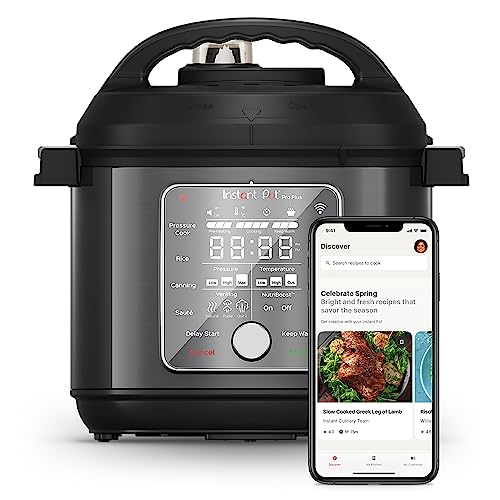
Instant Pot Pro Plus, 6 Quart
Adjustable pressure levels and a genuinely quiet steam release, which is the upgrade you notice every single cook.
Above 2,000 feet, add 5 percent to the cooking time for every additional 1,000 feet, so a 30 minute recipe becomes about 34 minutes at 5,000 feet and 39 minutes at 8,000 feet. A stovetop cooker holds a true 15 psi where most electrics sit nearer 11 psi, so stovetop times run roughly 20 percent shorter.
The formula
if altitude > 2000 ft: increase % = (altitude - 2000) / 1000 x 5 time = base time x (1 + increase% / 100) stovetop equivalent = electric time x 0.80 (15 psi against roughly 11 psi)
Water boils cooler as atmospheric pressure drops, so at altitude the pot reaches a lower absolute temperature at the same gauge pressure and the food cooks more slowly. This is pressure COOKING. Pressure canning has its own published procedures and its own failure modes, and none of this applies to it.
Gear that fits these numbers
An electric cooker is easier to live with and runs cooler. A stovetop cooker holds a true 15 psi, which is why its times are shorter and why serious stock making tends to end up there.
Adjustable pressure levels and a genuinely quiet steam release, which is the upgrade you notice every single cook.

Ninja's current pressure cooker, with a faster sear step than the Instant Pot equivalents before you ever bring it up to pressure.

The one almost everyone starts with, and still the right answer for beans, stock and tough cuts.

A stovetop cooker runs at a true 15 psi where electrics sit near 11, which is why stovetop times are shorter than every electric chart you will read.

Pressure cooker and air fryer with two lids, which genuinely does replace two appliances if counter space is the binding constraint.

The stovetop to buy if the lid alignment on traditional designs puts you off: it closes with one hand and no lining up.
Prices when last checked. They change often.
Every published pressure cooking time is time held at pressure. Before that, the cooker has to build pressure, which takes roughly ten to fifteen minutes in a six quart electric with a full pot of cold liquid. After it, a natural release can add another ten to twenty. A recipe that says twenty minutes is comfortably a fifty minute job, and that is worth knowing before you plan around it.
A quick release drops the pressure suddenly, and liquid inside the food flashes to steam as it goes. That is exactly what you want for vegetables that would otherwise keep cooking, and exactly what you do not want for beans, which split, or for large cuts of meat, which seize and toughen. Follow {{/pressure-cook-time/|the per food charts}} on this rather than guessing.
Add 5 percent to the cooking time for every 1,000 feet above 2,000 feet. At 5,000 feet that is a 15 percent increase, turning a 30 minute recipe into about 34 minutes. The reason is that water boils at a lower temperature as atmospheric pressure falls, so the pot reaches a cooler absolute temperature at the same gauge pressure.
A stovetop cooker holds a true 15 psi, while most electric models operate nearer 11 psi. Higher pressure means a higher boiling point and a hotter pot, so the same job finishes sooner. As a working conversion, stovetop times run about 20 percent shorter than the electric times printed in most recipes.
Not the time at pressure, but it changes everything around it. A larger pot with more liquid takes longer to build pressure and longer to release naturally, so the total elapsed time grows even though the timer setting does not. Fill levels matter for safety too: never go past the maximum fill line, and use the lower line for foods that foam.
No. Pressure canning is a preservation process with its own published procedures, its own equipment requirements and its own failure modes, and nothing on this page applies to it. Use tested canning recipes from a recognised source, and do not adapt a cooking time into a canning time under any circumstances.
Almost always a quick release. Dropping the pressure suddenly makes the liquid inside each bean flash to steam, which bursts the skin. Use a natural release for beans, pulses and large cuts of meat, and save the quick release for vegetables and anything you want to stop cooking immediately.
How this calculator works: it applies the formula above to the numbers you enter. Where a figure is published by the USDA or FSIS we quote it and name the source. Where a figure is derived from a physical model we say so and state the assumptions. Where we have no defensible figure the calculator returns nothing and tells you why, rather than guessing. This is researched general information, not professional food safety advice.