How pressure cookers work, and why the printed time is not the whole story
Published pressure cooker times are time at pressure only: a six quart electric cooker needs another 10 to 15 minutes to build pressure and a natural release adds 10 to 20 more, so a 20 minute recipe can occupy most of an hour from start to finish.
A pressure cooker works by sealing water vapor inside a pot so it cannot escape, which raises the pressure above the liquid and, because water boils at a higher temperature under higher pressure, lets the contents get hotter than a normal 212 F boil without ever turning fully to steam and leaving the pot. That single fact, that pressure raises the boiling point, is the entire mechanism behind everything a pressure cooker does faster than an open pot, and it is also why the minutes printed on a recipe describe only part of the total time a cook actually takes from start to finish.
Why does sealed pressure make food cook faster in the first place?
Water boils when its vapor pressure matches the pressure of the air pushing down on it. Trap the steam a pot produces instead of letting it escape, and the pressure inside the pot climbs above normal atmospheric pressure, which forces the boiling point higher along with it. At the roughly 11 psi most electric cookers run, water boils close to 240 F instead of 212 F, and that higher temperature is what shortens cook times for beans, tough cuts and stock. A stovetop pressure cooker holds a true 15 psi, higher than almost every electric model, which pushes the boiling point even further and is the reason stovetop times run shorter than the electric times printed on most recipes.
| Cooker type | Typical pressure | Time vs a published electric time |
|---|---|---|
| Electric, most models | About 11 psi | The baseline most recipes are written for |
| Stovetop | A true 15 psi | About 20 percent shorter |
Why does a 20 minute recipe seem to take most of an hour?
A pressure cook happens in three phases, and only the middle one is what a recipe's minutes describe. First the cooker has to build pressure, which for a full six quart electric pot typically takes another 10 to 15 minutes as the contents heat and enough steam accumulates to seal the valve. Then the timer runs for the printed minutes at pressure. Then, if the recipe calls for a natural release, pressure has to drop on its own before the lid will open, which commonly adds another 10 to 20 minutes depending on the volume inside. A 20 minute recipe with a natural release can occupy 40 to 55 minutes from the moment the lid goes on to the moment it comes off, and none of that extra time is a malfunction. A stovetop cooker like the Presto 6 qt or the T-fal Clipso tends to build pressure a little faster over a burner's higher initial output, but it still adds real minutes on both ends of the printed time.
What is the actual difference between a quick release and a natural release?
A quick release opens the valve immediately once cooking finishes, and the pressure inside drops suddenly enough that liquid trapped in the food flashes into steam as it escapes. That sudden flash is fine, even useful, on vegetables that would overcook during a slow natural release, but it is the wrong call on beans and pulses, which split their skins under the abrupt pressure change, and on large cuts of meat, which seize and toughen when juices are forced out that fast. A natural release lets pressure fall on its own over several minutes as the pot cools, which is gentler on both. As a working rule: quick release for vegetables you want to stop cooking immediately, natural release for beans, pulses and anything larger than a single serving of meat.
Does an adjustable pressure setting change any of this?
It narrows the gap rather than eliminating it. A machine like the Instant Pot Pro Plus offers pressure levels above the standard electric setting, which pushes the effective boiling point higher and shortens the at-pressure minutes closer to what a true stovetop 15 psi cooker achieves. It does not change the build and release phases, which are driven by pot size and liquid volume rather than the pressure level chosen. A higher pressure setting on a full pot still needs real minutes to seal and real minutes to release; it just spends less time in between.
Is a pressure cooker the same thing as a pressure canner?
No, and treating them as interchangeable is a genuine safety mistake rather than a technicality. Pressure canning preserves shelf stable food using validated process times and pressures specific to the food, jar size and altitude, developed to guarantee the internal temperature needed to destroy Clostridium botulinum spores throughout the jar. A multicooker or stovetop pressure cooker built for cooking dinner is not validated against those standards, and using one to can food at home without a manufacturer's specific canning certification is not a shortcut, it is an unverified process. This page and this site cover pressure cooking only; canning guidance belongs with USDA or a canner manufacturer's tested instructions.
How should I actually read a pressure cooker recipe before I start?
Add the phases together before deciding when dinner will be ready. Check the pot size against the recipe's liquid volume, since more liquid and a fuller pot both extend the build time. Note whether the release is natural or quick, and if natural, budget another 10 to 20 minutes on top of the printed time. For anything with a long at-pressure time, like a chuck roast in the Ninja HyperHeat or a from-scratch stock, the build and release phases are a small fraction of the total and barely change the math; for a quick 3 to 5 minute rice or vegetable recipe, they can double the real time from start to finish.
Gear that fits these numbers
Everything mentioned on this page
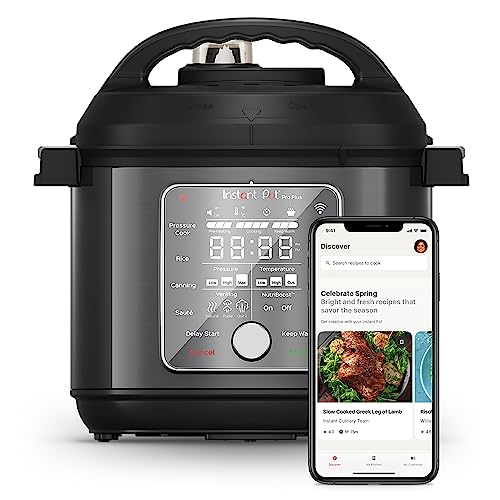
Instant Pot Pro Plus, 6 Quart
Adjustable pressure levels and a genuinely quiet steam release, which is the upgrade you notice every single cook.

Presto 6 Quart Stainless Steel Pressure Cooker
A stovetop cooker runs at a true 15 psi where electrics sit near 11, which is why stovetop times are shorter than every electric chart you will read.

T-fal Clipso Stainless Steel Pressure Cooker, 6.3 Quart
The stovetop to buy if the lid alignment on traditional designs puts you off: it closes with one hand and no lining up.

Ninja HyperHeat 9-in-1 Pressure Cooker, 6.5 Quart
Ninja's current pressure cooker, with a faster sear step than the Instant Pot equivalents before you ever bring it up to pressure.
Prices when last checked. They change often.
Frequently asked questions
Why does my electric pressure cooker take so long just to say it's pressurizing?
A full pot, cold ingredients straight from the refrigerator, and a large amount of liquid all extend the build phase, since the cooker has to heat everything to boiling before enough steam accumulates to seal the valve and register pressure. A half full pot of room temperature ingredients builds pressure noticeably faster than a full pot of cold stock and bones. This phase is not covered by the recipe's printed minutes and is normal, not a malfunction.
Can I speed up a natural release without switching to a quick release?
Some cooks use a hybrid approach, letting the pot sit for 10 minutes of natural release and then venting the remaining pressure quickly, which softens the abrupt pressure drop compared to an immediate quick release while saving some time compared to a full natural release. This works reasonably well for many meats but is still harder on beans and pulses than a full natural release, since some of the sudden pressure change still reaches them.
Does altitude change how long a pressure cook actually takes?
Yes. Lower atmospheric pressure at elevation means water boils at a lower temperature for the same gauge pressure inside the pot, so recipes need more time above 2,000 feet. The standard adjustment is 5 percent more time for every 1,000 feet above that threshold, which is covered in detail on the altitude guide for exact numbers at specific elevations.
Why do my beans split their skins when I use a quick release?
The sudden pressure drop of a quick release makes the water inside each bean flash to steam almost instantly, and that abrupt internal expansion is often enough to rupture the skin from the inside. A natural release lets the pressure inside the pot, and inside each bean, fall gradually as everything cools, which avoids that shock. This is the main reason bean recipes almost always call for a natural release rather than a quick one.
Is a stovetop pressure cooker more dangerous than an electric one?
Modern stovetop cookers carry the same style of safety valves and locking lids as electric models and are not inherently more dangerous, though they do require active attention to the burner rather than a set-and-forget program. Very old stovetop cookers passed down for decades may lack modern safety features like multiple backup pressure release valves, so an older unit is worth inspecting or replacing rather than assuming it matches current standards.
Can I use my pressure cooker to can vegetables at home?
Not safely without a specific canning certification for that model. Home canning of low acid foods like most vegetables requires a validated process, including exact pressures and times tied to jar size and altitude, that guarantees destruction of Clostridium botulinum spores throughout the jar. A cooking-focused pressure cooker or multicooker has not been tested against that standard, so canning guidance needs to come from USDA or the specific appliance manufacturer's tested canning instructions, not from a cooking time chart.
Sources
Published figures, quoted as published. We do not generate our own time and temperature data.
How we research: we compare manufacturer specifications, owner manuals, published USDA and FSIS figures and recurring themes in verified owner reviews. We do not cook test batches or run instruments, and nothing here is professional food safety advice. When a figure is not published by a source we trust, we say so rather than estimate one.