How sous vide pasteurization actually works
The USDA published safe minimum internal temperatures are 165 F for poultry, 160 F for ground meat, 145 F with a 3 minute rest for whole muscle beef, pork, lamb and veal, 145 F for fish, and 160 F for eggs, and reaching one of those is pasteurization on its own. Below those temperatures, pasteurization still happens, but it needs a specific hold time from the USDA FSIS Appendix A lethality tables, and that time changes with the exact product, its fat content and its salt content, which is why this page explains the concept and will not hand you a single number for it.
Pasteurization is not a temperature. It is a temperature held for long enough to reduce a harmful population of bacteria to a safe level, and the two halves of that sentence cannot be separated. A steak held at 131 F for one minute and a steak held at 131 F for ninety minutes are at the same temperature and are not equally safe, because pasteurization is a process that takes time to complete even once the target temperature is reached. The USDA publishes safe minimum internal temperatures that require no hold time at all: 165 F for poultry, 160 F for ground meat, 145 F for whole muscle beef, pork, lamb and veal with a 3 minute rest built into the rule, 145 F for fish, 160 F for eggs. Below those numbers, which is where most sous vide cooking for texture actually happens, a correct hold time exists, but it lives in the USDA FSIS Appendix A lethality tables, not in a table on this page, because that number depends on specifics we cannot know about your particular piece of food.
What does it actually mean to reduce bacteria to a safe level?
Public health agencies describe pasteurization in terms of log reduction, a way of counting how many times over the bacterial population gets cut. A 5-log reduction means the population is reduced to one hundred thousandth of what it started at, a 6.5-log reduction is a deeper cut still, and which figure applies depends on the pathogen of concern for that specific food. Heat does this work gradually rather than instantly: bacteria die at a rate that depends on both the temperature and how long they are held there, described by what food scientists call a D-value, the time needed at a given temperature to reduce a population by one log. Higher temperatures have shorter D-values, lower temperatures have longer ones, and that relationship is exactly why a lower sous vide temperature is not unsafe, it simply needs more time to finish the same job a higher temperature could do faster.
Why can't a single temperature ever be the whole safety claim?
Because a temperature by itself says nothing about how long bacteria were exposed to it. Reaching 131 F the instant before you pull food out of the bath is not the same event as holding food at 131 F for over an hour, even though both moments would show the same reading on a thermometer. This is the single most common error in sous vide content on the internet: an article quotes a temperature, sometimes even the correct one for a given product, and drops the time that made it safe, or worse, pairs a real temperature with a time borrowed from an unrelated recipe. A pasteurization claim needs both numbers together, sourced together, for the specific food in question, or it is not a safety claim at all, just a temperature.
Why does fat and salt content change the required hold time?
Fat insulates. A piece of meat with a higher fat content transfers heat through itself more slowly than a lean piece at the same thickness, which means bacteria embedded in fattier tissue can sit at a slightly lower effective temperature for longer even while the surrounding meat reads a uniform number on a probe. Salt content changes bacterial heat resistance directly: some organisms become measurably more heat resistant in a higher salt environment, which is part of why a cured product and an uncured one at the same temperature do not pasteurize on the same schedule. The USDA FSIS Appendix A tables exist specifically to account for this, breaking lethality requirements down by product category, fat percentage bands and salt content, because a single generic number could not be accurate across that range of real food.
| Category | Temperature | Rest |
|---|---|---|
| Poultry, whole and ground | 165 F | None |
| Ground beef, pork, lamb, veal | 160 F | None |
| Whole muscle beef, pork, lamb, veal | 145 F | 3 minutes, part of the rule |
| Fish and shellfish | 145 F | None |
| Egg dishes | 160 F | None |
Why won't this site publish a hold time below those temperatures?
Because we would be guessing, and guessing on a page about food safety is worse than saying nothing. A correct hold time below the USDA published minimum has to come from the Appendix A lethality tables for the specific product, its fat content and its salt content, and those tables run to many pages precisely because the number moves with each of those variables. Publishing one figure and calling it the sous vide pasteurization time for, say, chicken breast at 140 F would be accurate for some chicken breast and quietly wrong for a fattier or saltier piece of the same cut, and there is no way for a general purpose site to know which one is on your cutting board. So this page stops here on purpose: read the Appendix A tables directly for your product, or cook to the published USDA safe minimum temperature, where the rule is satisfied the instant the core reaches it and there is no hold time calculation left to get wrong.
So what can you actually rely on when cooking below the published minimum?
Rely on a thermometer, not a memory of a number you read somewhere. Confirm the actual core temperature of your food with an instant read thermometer such as the Thermapen ONE, which reads in about one second to within half a degree, or a slightly slower but still accurate option like the ThermoPop 2. A circulator like the Anova Precision Cooker 3.0 holds a bath at a set temperature reliably once it gets there, which is the half of the pasteurization equation this site is comfortable calculating and does through the come-up time calculator. The other half, the validated hold time for your specific product at a temperature below the published minimum, belongs to the USDA FSIS Appendix A source below, not to a table on this page.
Gear that fits these numbers
Everything mentioned on this page
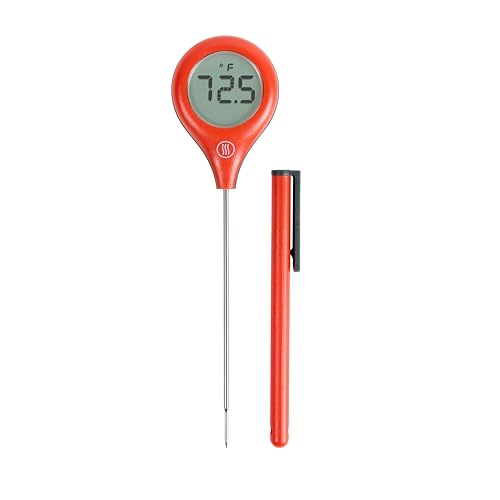
ThermoWorks ThermoPop 2
A third of the Thermapen price for most of the useful accuracy. The right pick if you are buying your first real thermometer.

Anova Precision Cooker 3.0
The default full size circulator: enough wattage to bring a 12 quart bath up quickly and hold it, with app control for long overnight cooks.
Prices when last checked. They change often.
Frequently asked questions
Is a temperature below the USDA safe minimum ever actually safe?
Yes, when it is paired with a hold time long enough to reach the required log reduction for that specific product, which is exactly what the FSIS Appendix A tables provide. A temperature below 145 F, 160 F or 165 F is not automatically unsafe, but it is also not automatically safe just because sous vide recipes commonly use it. Safety at a lower temperature always depends on time, and that time has to come from a validated source for your specific food rather than a number copied from an unrelated recipe.
Why do some cookbooks give a specific sous vide pasteurization time and this site does not?
Some do the work of sourcing a time for one specific product at one specific fat and salt level and say so clearly, which is legitimate. Many others copy a number from another source without checking whether it applies to the exact cut, thickness and preparation in front of the reader, which is how an inaccurate figure spreads. This page explains the concept so you can evaluate any number you encounter elsewhere, rather than adding another number to that pool without full confidence in its source.
Does a higher sous vide temperature always mean a shorter required hold time?
Generally yes, because bacterial die-off accelerates as temperature rises, which is the same relationship a D-value describes. That is exactly why the USDA published minimum temperatures need no hold time at all: they sit high enough that the required time rounds down to effectively zero. It is also why a small increase in temperature, even a few degrees, can meaningfully shorten a hold time at temperatures below that published minimum.
What is a D-value in plain terms?
A D-value is the time it takes, at a specific temperature, to kill ninety percent of a bacterial population, which food scientists describe as one log reduction. A shorter D-value means bacteria are dying faster at that temperature. D-values are specific to both the organism and the food it is in, which is another reason a single pasteurization number cannot cover every sous vide dish at a given temperature.
Does resting meat after cooking count toward a pasteurization hold time?
Only the rest that is explicitly part of a published rule counts, such as the 3 minute rest built into the USDA whole muscle standard at 145 F. A general rest for juiciness or carryover, taken off heat entirely, does not add pasteurization time, because the meat is no longer being held at the temperature that rule depends on. Treat any hold time as something that happens while the food is still at temperature, not afterward.
Where should I actually go to find a hold time for a specific cut and temperature?
The USDA FSIS Appendix A Compliance Guideline for Meeting Lethality Performance Standards is the source these tables live in, and it is written to be used product by product rather than skimmed for a single answer. If reading a regulatory document is not something you want to do before dinner, the simplest reliable alternative is to cook to the published USDA safe minimum temperature for your protein, where no hold time calculation is required at all.
Sources
Published figures, quoted as published. We do not generate our own time and temperature data.
How we research: we compare manufacturer specifications, owner manuals, published USDA and FSIS figures and recurring themes in verified owner reviews. We do not cook test batches or run instruments, and nothing here is professional food safety advice. When a figure is not published by a source we trust, we say so rather than estimate one.