Vacuum bag size for a marinating steak
For a marinating steak, use a bag at least 8 inches wide by 11 inches long. This needs a chamber machine: an external sealer pulls air through the bag opening and will pull the liquid with it.
The sizing
| Dimension | Food | Minimum bag |
|---|---|---|
| Width | About 7 in | 8 in |
| Length | About 9 in | 11 in |
| Clear film above the food | Not applicable | 2 in |
| Machine type | Not applicable | Chamber only |
Marinade is a liquid, and an external sealer will pull it into the pump.
External and chamber bags are not interchangeable
An external sealer pulls air out through the open end of the bag, and it can only do that because the film is embossed with channels. A smooth bag in an external machine simply collapses against itself and never evacuates. A chamber machine evacuates the whole box around the bag, so it uses smooth film, which is both cheaper per bag and useless in an external sealer. Buying the wrong one is the most common first week mistake, and it looks like a broken machine.
Gear that fits these numbers
What this job needs
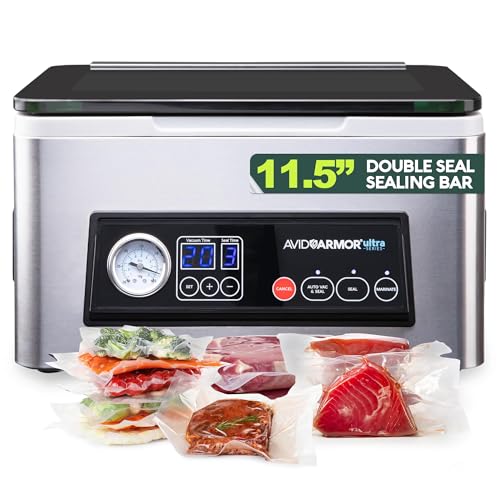
Avid Armor USV20 Chamber Vacuum Sealer
A chamber machine evacuates the whole box rather than sucking through the bag opening, which is the only way to seal soup, brine or a marinating steak without a mess.

Avid Armor Chamber Vacuum Sealer Pouches, 3.5 mil
Chamber bags are smooth and cheaper per bag than embossed film, and they only work in a chamber machine. Mixing the two up is the most common first week mistake.

Cambro Camwear 12 Quart Square Container
Square packs bags better than round, and clear polycarbonate lets you see the water line without lifting the lid.
Prices when last checked. They change often.
Frequently asked questions
What size vacuum bag do I need for a marinating steak?
At least 8 inches wide by 11 inches long. An external sealer needs three inches of clear embossed film above the food because the bag is pulled through a channel, while a chamber machine only needs about two inches since it evacuates the whole box instead.
Can an external sealer handle this?
Not reliably. Liquid within reach of the seal bar gets pulled toward the pump as the air leaves, which both ruins the seal and damages the machine over time. A chamber sealer evacuates the whole chamber so the liquid never travels. The workaround with an external sealer is to freeze the liquid into a block first and seal it solid.
Where do the numbers on this page come from?
Geometry and machine capability. No food safety claims are made here. Nothing here comes from cooking test batches in our own kitchen, and we do not claim otherwise. Where the USDA or FSIS publishes a figure we quote it and link the source. Where we have no defensible figure we say so rather than estimate one.
Sources
Published figures, quoted as published. We do not generate our own time and temperature data.
How we research: we compare manufacturer specifications, owner manuals, published USDA and FSIS figures and recurring themes in verified owner reviews. We do not cook test batches or run instruments, and nothing here is professional food safety advice. When a figure is not published by a source we trust, we say so rather than estimate one.