Best combi steam oven
The best combi steam oven for most kitchens is the Cuisinart CSO-300N Convection Steam Oven at $380.99, which runs steam only, convection only, or both together from a refillable reservoir. The cheapest countertop oven with real steam and convection in one box is the Ninja Combi at $249.95.
A combi steam oven injects actual steam into a convection chamber rather than relying on a water tray that mostly humidifies the air near the bottom of the oven, and that difference is what gives bread an oven spring and reheated food a texture a standard oven or a basket air fryer cannot match. Cuisinart CSO-300N at $380.99 is the long running benchmark countertop combi for a reason: steam only, convection only, or both together from a refillable reservoir, which is the combination serious home bakers and reheat-focused cooks actually use.
The three tiers
Every roundup here is built as three genuinely different answers rather than one flat ranking, because that is how people actually shop: a first purchase, a considered upgrade, and a ceiling. The expert pick is not the best pick for most readers, and the section below says who should skip it.
CIARRA 12-in-1 Countertop Steam Oven with Air Fryer
At $239.99 with 25.4 quarts of capacity and twelve modes including air fry, this is the cheapest way into steam plus convection cooking in a single countertop box.
Skip it if: Skip it if you want a dedicated benchmark combi. Twelve modes on one machine at this price usually means several of them share the same element at a different setting rather than genuinely different hardware.
Ninja Combi 14-in-1 Multicooker and Air Fryer Oven
Ninja's indoor combi runs steam, air fry and bake from one 14 function machine at $249.95, and it is the one Ninja worth looking at specifically because it offers real steam rather than another basket fryer.
Skip it if: Skip it if steam quality and bread results matter more to you than convenience. A dedicated combi like the Cuisinart is built around steam performance first.
Breville Combi Wave 3-in-1
One box replaces a microwave, an air fryer and a countertop oven at $499.95, which is the case for it in a kitchen that has genuinely run out of counter space for three separate appliances.
Skip it if: Skip it if you do not need microwave functionality bundled in, or if counter space is not the binding constraint. A dedicated combi oven like the Cuisinart focuses entirely on steam and convection instead.
Gear that fits these numbers
The three picks side by side
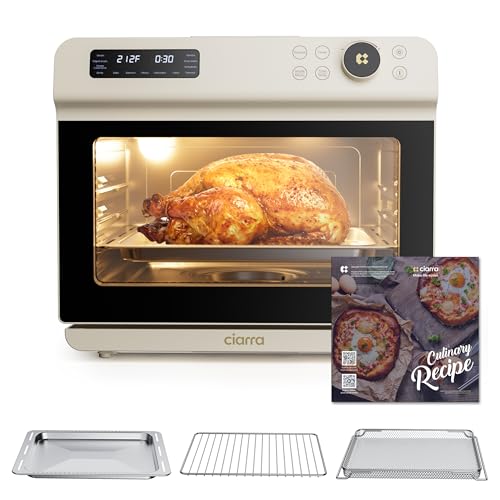
CIARRA 12-in-1 Countertop Steam Oven with Air Fryer
The cheapest way into steam plus convection in one box, with the usual caveat that twelve modes means several of them are the same element at a different number.

Ninja Combi 14-in-1 Multicooker and Air Fryer Oven
Ninja's indoor combi: steam and convection together in a countertop box, and the one Ninja to look at if you want steam rather than another basket fryer.

Breville Combi Wave 3-in-1
One box replacing a microwave, an air fryer and a countertop oven, which is the case for it in a kitchen that has run out of counter.
Prices when last checked. They change often.
What actually makes a combi oven different from a countertop oven with a water tray?
A water tray oven heats a small reservoir near the heating element and lets ambient humidity build up inside the chamber, which softens crust slightly but never approaches saturated steam. A true combi oven, like Cuisinart CSO-300N or Nuwave Combi, injects steam directly into the cooking chamber under its own heat source, which is strong enough to give bread real oven spring in the first few minutes of baking and to reheat food without drying out the surface the way a dry convection cycle does. That injected steam step is the entire premium a combi oven is charging for.
Do you need a dedicated ferment or proof mode?
Toshiba steam oven includes a dedicated low temperature ferment mode among its six functions, which functions as a genuinely reliable proofing box, something most kitchens improvise with an oven light or a warm counter. If proofing bread or fermenting yogurt is a regular habit rather than an occasional project, a combi oven with a real low temperature hold, rather than one that only offers high heat steam and convection, is worth prioritizing.
| Model | Price | Modes | Capacity |
|---|---|---|---|
| Ninja Combi 14-in-1 | $249.95 | Steam, air fry, bake | 14 functions |
| CIARRA 12-in-1 Steam Oven | $239.99 | 12, including air fry | 25.4 qt |
| Toshiba 6-in-1 Compact Steam Oven | $319.00 | 6, including ferment | Compact |
| Tovala Smart Oven Pro | $349.99 | 6, including steam | Compact, barcode scan optional |
| Nuwave Combi Steam Oven | $359.99 | Steam and convection | 16 qt |
| Cuisinart CSO-300N | $380.99 | Steam, convection, combo | Refillable reservoir |
| Breville Combi Wave 3-in-1 | $499.95 | Microwave, air fry, oven | Brushed stainless |
Is the Ninja Combi's steam mode as good as a dedicated steam oven?
Ninja Combi genuinely injects steam rather than relying on a tray, which puts it in the same mechanical category as Cuisinart CSO-300N for a lower price. Where the two differ is refinement: the Cuisinart is a single purpose combi built around steam and convection as its whole reason to exist, while the Ninja folds steam into a 14 function multicooker and air fryer. For most home baking and reheating, the Ninja's steam performs well; for someone chasing the most consistent bread crust or the finest control over steam versus convection, the dedicated Cuisinart still leads.
Countertop combi oven or building a proofing box and an oven separately?
A dedicated combi oven like Cuisinart CSO-300N replaces a proofing setup, a steamer and a convection oven's finishing step in one box, at a price between $240 and $500 depending on the model. Building the same capability from separate tools, a proofing box, a stovetop steamer basket and relying on a full size oven for convection, costs less upfront but takes more counter space and more attention during a cook, since nothing is coordinated automatically. For a kitchen that bakes or reheats often, the combi oven earns its price back in convenience alone.
What can a small compact combi oven do that a full size one cannot?
Toshiba steam oven and Tovala Pro both trade capacity for a footprint small enough to sit permanently on a counter next to a coffee maker, which matters in a kitchen too small for a second full size oven. Tovala Pro adds an optional barcode scanning feature for meal kits, and the useful part is that the oven still works as a normal combi without ever using that feature, so it is not a reason to avoid the machine if you plan to cook from scratch. Compact size is the tradeoff against something like Nuwave Combi at 16 quarts: less room for a whole chicken or a full sheet pan, in exchange for counter space back.
What temperature should food reach in a combi oven?
Steam changes texture and crust, not the safe cooking temperature. The same USDA published safe minimum internal temperatures apply: 165 F for all poultry, 160 F for ground beef, pork, lamb and veal, 145 F with a three minute rest for whole muscle beef, pork, lamb and veal, and 145 F for fish. Moist heat from steam can make food appear done at the surface before the core reaches a safe temperature, so a thermometer at the thickest point is still the way to confirm doneness rather than relying on the timer alone.
How we chose
Every mode, price and capacity figure above was researched from manufacturer specifications and the verified marketplace listings behind each product. We did not bake bread or run a steam cycle in any of these ovens ourselves. Where a texture or performance claim about steam versus a water tray is made, it reflects published manufacturer documentation and recurring themes in verified owner reviews rather than a test we conducted.
Gear that fits these numbers
Everything mentioned on this page
CIARRA 12-in-1 Countertop Steam Oven with Air Fryer
The cheapest way into steam plus convection in one box, with the usual caveat that twelve modes means several of them are the same element at a different number.
Ninja Combi 14-in-1 Multicooker and Air Fryer Oven
Ninja's indoor combi: steam and convection together in a countertop box, and the one Ninja to look at if you want steam rather than another basket fryer.
Breville Combi Wave 3-in-1
One box replacing a microwave, an air fryer and a countertop oven, which is the case for it in a kitchen that has run out of counter.

Nuwave Combi Steam Oven, 16 Quart
Real injected steam rather than a water tray, at the price where combi cooking stops being a professional only technique.

Toshiba 6-in-1 Compact Steam Oven
A dedicated low temperature ferment mode, which is the cheapest reliable proofing box most kitchens can buy.

Tovala Smart Oven Pro
Steam and convection in a small footprint. The meal kit scanning is optional and the oven works as a normal combi without it.

ThermoWorks Thermapen ONE
One second and half a degree. On a page about pasteurization that accuracy is not a luxury, it is the difference between a figure meaning something and not.
Prices when last checked. They change often.
Frequently asked questions
What is the best combi steam oven overall?
The Cuisinart CSO-300N Convection Steam Oven at $380.99 is the best overall combi steam oven. It runs steam only, convection only, or both together from a refillable reservoir, giving bread real oven spring and reheated food better texture than a water tray oven, and it has been the long running benchmark countertop combi for that reason.
Do I need real injected steam, or is a water tray enough?
A water tray only raises ambient humidity slightly near the bottom of the oven, while injected steam actively adds moisture strong enough to affect crust and oven spring during baking. If bread, pastry or reheating leftovers without drying them out matters to you, injected steam from a true combi oven like the Cuisinart or Nuwave makes a real, noticeable difference.
What is the cheapest combi oven with real steam?
The Ninja Combi 14-in-1 at $249.95 is the cheapest countertop oven that injects genuine steam rather than relying on a water tray. It folds steam into a broader 14 function multicooker and air fryer rather than focusing on steam alone, which is the tradeoff against a dedicated combi like the Cuisinart CSO-300N.
What is the difference between a steam oven and an air fryer oven?
An air fryer oven circulates dry, hot air with a fan to crisp and brown food quickly. A steam oven injects actual water vapor into the cooking chamber, which adds moisture instead of removing it, improving bread crust and preventing reheated food from drying out. A combi oven runs both modes, separately or together, in one appliance.
Can a combi oven replace a dedicated bread proofing setup?
Some can. The Toshiba 6-in-1 Compact Steam Oven includes a dedicated low temperature ferment mode built specifically for proofing dough and similar slow ferments, functioning as a reliable proofing box. Not every combi oven includes this mode, so check for it specifically if proofing is a regular part of your baking.
Does steam cooking change the safe internal temperature for meat?
No. The USDA published safe minimum internal temperatures are the same regardless of cooking method: 165 F for poultry, 160 F for ground meat, and 145 F with a three minute rest for whole muscle beef, pork, lamb and veal. Steam can make the surface of food look done sooner, so confirm doneness with a thermometer at the thickest part rather than by appearance.
Sources
Published figures, quoted as published. We do not generate our own time and temperature data.
How we research: we compare manufacturer specifications, owner manuals, published USDA and FSIS figures and recurring themes in verified owner reviews. We do not cook test batches or run instruments, and nothing here is professional food safety advice. When a figure is not published by a source we trust, we say so rather than estimate one.