Steam oven uses at home: proofing, reheating and more
A combi steam oven earns its counter space on proofing bread dough at a gentle 80 F to 100 F with real humidity, reheating leftovers without drying them out, and steaming vegetables or fish directly with no stovetop steamer basket needed. A water tray in a regular oven cannot substitute for any of these, since it never delivers the volume of injected steam a dedicated combi function does.
Once a combi steam oven is already sitting on the counter, its steam function ends up doing more everyday work than the headline bread baking use case suggests. The Toshiba 6-in-1 compact steam oven runs low temperature steam for proofing dough, full steam for vegetables and fish, and a reheat cycle that brings back rice or pizza without the dry, rubbery result a microwave produces. None of these jobs need the oven's convection element at all, which is worth knowing before assuming a combi oven is only for bread and roasts.
Can I really use it to proof bread dough instead of buying a proofing box?
Yes, and it is the single most useful daily habit a combi oven adds for anyone who bakes bread regularly. Yeast activity favors a warm, humid environment, generally somewhere around 80 F to 100 F, and a combi oven's low temperature steam setting delivers both heat and real humidity at once, keeping the surface of the dough from drying and skinning over the way it would rising uncovered on a countertop. The Toshiba 6-in-1 compact steam oven includes a dedicated ferment mode built specifically for this, which removes the guesswork of picking a temperature and humidity level manually.
| Task | Mode | Typical setting |
|---|---|---|
| Proof bread dough | Steam only, low heat | 80 F to 100 F |
| Reheat leftovers | Steam only, moderate heat | 150 F to 165 F center |
| Steam vegetables or fish | Steam only | Near 212 F steam, short time |
| Bake bread with oven spring | Steam plus convection | 350 F to 450 F with a steam burst |
What is the best way to reheat leftovers without drying them out?
Steam mode, run at a moderate temperature rather than full power. A microwave heats water molecules inside the food directly, driving moisture toward the surface and out into the appliance's dry interior air, which is why reheated rice, pasta and pizza crust so often come back gummy or leathery. A combi oven's steam cycle surrounds the food with humidity instead of pulling moisture out of it, so the Tovala Smart Oven Pro and similar machines reheat a plate of leftovers closer to how it tasted the first time, crust included. Reheated food should still reach 165 F at the center regardless of which appliance did the reheating.
Can I steam vegetables and fish directly instead of using a stovetop steamer basket?
Yes, and it frees up a stovetop burner in the process. Steam only mode on a machine like the Nuwave Combi cooks vegetables and delicate fish the same way a stovetop steamer basket does, gentle, moist heat with no direct contact with boiling water, but across a full oven cavity rather than one crowded basket. This matters most for a dinner with several vegetable sides going at once, since an oven cavity holds several trays where a stovetop steamer basket holds one layer.
Can I actually get real oven spring baking bread at home?
Yes, which is the use case combi ovens are usually marketed around. Running steam and convection together, the way the Cuisinart CSO-300N does in its combination mode, keeps a loaf's crust soft long enough for the dough to keep expanding in the oven before the surface sets, producing the taller rise and blistered crust associated with a professional bread oven. A dry home oven, even with a pan of water on the bottom rack, cannot deliver enough steam volume to reproduce this reliably.
Is a water tray in my existing oven basically the same thing?
No, and this is worth being direct about since it is the most common misconception around combi ovens. A pan of water on the bottom rack of a conventional oven releases steam passively, limited by how fast that water happens to evaporate at whatever temperature the oven is set to, and most conventional oven doors and vents are not built to hold that humidity inside the cavity anyway. A dedicated combi function like the one in the CIARRA 12-in-1 countertop steam oven generates and injects steam directly and in a controlled, repeatable amount, which is the actual volume difference behind everything from bread oven spring to gentle reheating.
Gear that fits these numbers
Everything mentioned on this page

Tovala Smart Oven Pro
Steam and convection in a small footprint. The meal kit scanning is optional and the oven works as a normal combi without it.

Nuwave Combi Steam Oven, 16 Quart
Real injected steam rather than a water tray, at the price where combi cooking stops being a professional only technique.
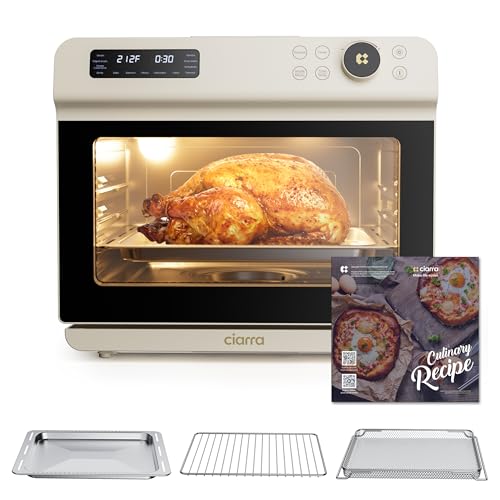
CIARRA 12-in-1 Countertop Steam Oven with Air Fryer
The cheapest way into steam plus convection in one box, with the usual caveat that twelve modes means several of them are the same element at a different number.

Cuisinart CSO-300N Convection Steam Oven
The long running benchmark countertop combi: steam only, convection only, or both together, which is the combination that gives bread an oven spring a home oven cannot.

Cosori Food Dehydrator, 6 Stainless Trays
A rear mounted fan dries every tray at the same rate, which is why you do not have to rotate trays the way stacked round dehydrators demand.
Prices when last checked. They change often.
Frequently asked questions
What is the easiest first thing to try in steam mode?
Reheating a plate of leftover rice or roasted vegetables at a moderate steam temperature is the easiest place to start, since it needs no recipe adjustment and the improvement over a microwave is obvious on the first try. Bread proofing and full combination baking take a little more familiarity with the specific oven's settings, so save those for after a few easy reheats have built confidence in how the machine behaves.
Do I need special cookware to use the steam function?
Mostly no, though the dish needs to tolerate moisture and, for anything going in at higher combination temperatures, the same heat the dish would see in a regular oven. Glass, ceramic and stainless dishes all work fine. Avoid anything not rated for oven use, the same rule that applies to a conventional oven, and check the manual for any tray restrictions specific to the model.
Can I dry herbs or make jerky using a combi oven's steam settings?
No, dehydrating wants the opposite of what steam mode provides: low humidity and steady airflow to pull moisture out of food rather than add it. Use the convection only mode at a low temperature if the oven supports it, but a dedicated dehydrator such as the Cosori 6 tray dehydrator is built specifically for that airflow pattern and will do a more even job than a combi oven improvising it.
Will steam mode make my oven interior rust or wear out faster?
A combi oven built for steam is designed around that moisture exposure, with a stainless interior and seals rated for repeated humidity, so normal use should not cause premature wear. What does matter is descaling the water reservoir and steam generator on the schedule the manual specifies, since mineral buildup from tap water is the actual long term maintenance issue, not the steam itself damaging the cavity.
Is combination mode always better than picking steam or convection alone?
No, each mode has a job the others do not do as well. Combination mode is the right call for bread and whole roasts that need both a moist interior and a browned exterior, but a delicate fish fillet does better in steam only, and something meant to crisp, like roasted vegetables, does better in convection only. Running combination mode by default on everything wastes the ability to pick the right tool for what is actually in the oven.
Can two dishes with different needs go in at the same time?
Only if they want the same mode and roughly the same temperature, since a combi oven runs one mode across the whole cavity rather than zone by zone. A tray of vegetables in steam mode and a loaf of bread in combination mode cannot run together, but two vegetable trays both wanting steam mode at the same temperature can share the cavity the same way a stovetop steamer basket would if it were larger.
Sources
Published figures, quoted as published. We do not generate our own time and temperature data.
How we research: we compare manufacturer specifications, owner manuals, published USDA and FSIS figures and recurring themes in verified owner reviews. We do not cook test batches or run instruments, and nothing here is professional food safety advice. When a figure is not published by a source we trust, we say so rather than estimate one.