Best sous vide machine
The best sous vide machine for most kitchens is the Anova Precision Cooker 3.0 at $169: 1100 watts brings a 12 quart bath up quickly and holds it through an overnight cook. The cheapest reliable way to find out if you like sous vide at all is the Anova Precision Cooker Nano 2.0 at $68.
A sous vide circulator only has to do two things well: heat a bath fast enough to be practical and hold a set point tight enough that a steak comes out the same way twice. For most kitchens, Anova 3.0 at $169 does both without asking you to think about it again. It is not the cheapest circulator here and it is not the most powerful, and that is the point: 1100 watts is enough to bring a 12 quart bath up in a reasonable time, the app handles long overnight cooks without you standing over it, and the stainless build survives years of being clamped to the same pot.
The three tiers
Every roundup here is built as three genuinely different answers rather than one flat ranking, because that is how people actually shop: a first purchase, a considered upgrade, and a ceiling. The expert pick is not the best pick for most readers, and the section below says who should skip it.
Cheapest way in
At $68 this is the least expensive way to find out whether sous vide fits how you actually cook, and it holds a set point just as precisely as the full price models once it gets there.
Skip it if: Skip it if you regularly cook for more than two or three people. 750 watts is slow to bring a 12 quart bath up to temperature, which turns a weeknight dinner into a long wait.
Breville Joule Turbo Sous Vide
Full 1100 watt power in a body small enough to store in a drawer, which matters in a kitchen that already has an air fryer and a stand mixer fighting for counter space.
Skip it if: Skip it if you want a screen on the device itself. Every setting, including the current temperature, lives in the phone app, and that is a real dependency if your phone dies mid cook.
Anova Precision Cooker Pro
Rated for continuous duty rather than occasional dinners, which is what separates it from every consumer circulator on this list if you run a bath most days or hold a 48 hour brisket.
Skip it if: Skip it if you cook sous vide a few times a month. The continuous duty rating and the price that comes with it are wasted on occasional use, and Anova 3.0 does the same job for less.
Gear that fits these numbers
The three picks side by side

Anova Precision Cooker Nano 2.0
The cheapest way to find out whether you actually like sous vide. Slower to come up to temperature, and it holds a set point just as well once it gets there.
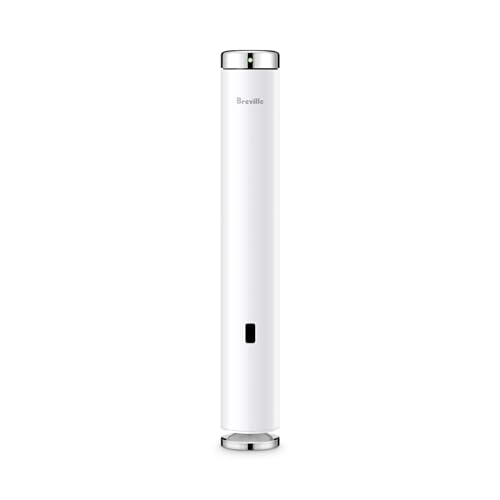
Breville Joule Turbo Sous Vide
Small enough to live in a drawer and strong enough for a full bath, with the tradeoff that there is no display on the device: the phone is the interface.
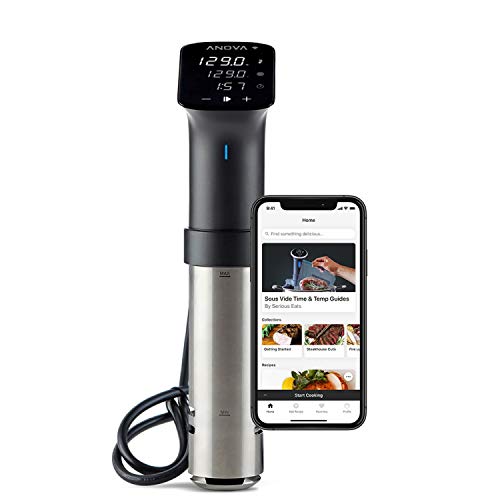
Anova Precision Cooker Pro
Rated for continuous running rather than occasional dinners, which is what separates it from the consumer models when you cook 48 hour briskets or run a bath every day.
Prices when last checked. They change often.
How much wattage do you actually need?
Wattage decides how fast a circulator brings a bath up to temperature, not how well it holds it once there. A 750 watt unit like Anova Nano and a 1100 watt unit like Anova 3.0 will both sit dead on 131 F for six hours without drifting. The difference shows up in the first fifteen to twenty minutes, and again every time you drop a cold steak into an already hot bath.
- 750 W: fine for one or two portions in a smaller container.
- 1000 to 1100 W: the practical default for a 12 quart bath and multiple portions.
- 1200 W and a continuous duty rating: for daily use or very long cooks, not for speed alone.
| Model | Price | Power | Best for |
|---|---|---|---|
| Anova Precision Cooker Nano 2.0 | $68 | 750 W | Trying sous vide for the first time |
| Wancle Sous Vide Cooker | $43.99 | 1100 W | Full power with no app or account |
| Inkbird ISV-100W | $95.99 | 1000 W | Full power on a budget |
| Anova Precision Cooker 3.0 | $169 | 1100 W | Most kitchens |
| Breville Joule Turbo | $237.07 | 1100 W | Smallest full power unit |
| Anova Precision Cooker Pro | $268 | 1200 W | Daily or continuous use |
Do you need WiFi and app control, or is a dial enough?
App control on Anova 3.0 or Joule Turbo earns its keep on a cook you start before you leave the house: set the temperature remotely, get a push notification when the bath is up, adjust it from another room. None of that changes how the food cooks. If the idea of a kitchen appliance needing your phone bothers you, Wancle runs at full 1100 watt power off a dial and a display with no account required, and Inkbird ISV-100W splits the difference with an app that is optional rather than mandatory.
What is the real difference between the Anova 3.0 and the Anova Pro?
On paper it looks small: 1100 watts against 1200, both WiFi connected, both accurate to a fraction of a degree. The number that actually matters is the duty rating. Anova 3.0 is built for the way most people cook, a few hours at a time, a few times a week. Anova Pro is rated for continuous running, which is the difference between a circulator that copes with a 48 hour short rib cook or a bath that runs most days in a household that has fully switched over, and one that is asked to do that occasionally and shows it early.
Is a budget circulator like the Inkbird actually good enough?
Inkbird ISV-100W runs the same 1000 watts as the name brand mid range circulators for roughly half the price, with an IPX7 waterproof rating that matters more than it sounds: a clamped circulator eventually takes a splash from a lid or a hand reaching past it. Inkbird ISV-300W is the step up in the same line, adding an on device display so you are not required to check the app just to see the current temperature. Neither has the brand recognition of Anova or Breville, but the core job, holding a set temperature for hours, does not require a brand name to do correctly.
Is sous vide actually safe?
Sous vide cooking is safe when two things are respected together: temperature and time. A vacuum bag is an anaerobic environment, meaning no oxygen reaches the food inside it, and that is the specific condition Clostridium botulinum needs to grow. That is not a reason to avoid sous vide, it is a reason to treat the bath temperature and the total time in the danger zone as real numbers rather than guidelines. USDA published safe minimum internal temperatures are 165 F for poultry, 160 F for ground meat, 145 F with a three minute rest for whole muscle beef, pork, lamb and veal, and 145 F for fish. Cooking below those figures for texture, which is common in sous vide, requires holding the food at that lower temperature for a specific length of time to pasteurize it, and that hold time comes from the USDA FSIS Appendix A lethality tables rather than from any single number we would reproduce here. Get food into the bath promptly, and get it out of the danger zone (40 F to 140 F) quickly on either end of the cook.
How we chose
Every price, wattage rating and specification above was researched from manufacturer documentation and the verified marketplace listings behind each product, not from cooking anything ourselves. We did not test these circulators in a kitchen. Where owner reviews are cited elsewhere on this site, they describe recurring themes across verified reviews, such as an app disconnecting or a display fading, rather than a claim that we observed it directly.
Gear that fits these numbers
Everything mentioned on this page
Anova Precision Cooker Nano 2.0
The cheapest way to find out whether you actually like sous vide. Slower to come up to temperature, and it holds a set point just as well once it gets there.
Anova Precision Cooker Pro
Rated for continuous running rather than occasional dinners, which is what separates it from the consumer models when you cook 48 hour briskets or run a bath every day.
Breville Joule Turbo Sous Vide
Small enough to live in a drawer and strong enough for a full bath, with the tradeoff that there is no display on the device: the phone is the interface.

Inkbird ISV-100W Sous Vide Cooker
Full wattage at roughly half the price of the name brands, with a waterproof body that survives the splash a clamped circulator eventually takes.

Inkbird ISV-300W Immersion Circulator
The step up in the Inkbird line, and the one to pick if you want app control without giving up an on device display.

Wancle Sous Vide Cooker
No app, no account, just a dial and a display. If the phone requirement on the Joule bothers you, this is the answer at the budget end.

ThermoWorks Thermapen ONE
One second and half a degree. On a page about pasteurization that accuracy is not a luxury, it is the difference between a figure meaning something and not.
Prices when last checked. They change often.
Frequently asked questions
What is the single best sous vide machine to buy?
The Anova Precision Cooker 3.0 at $169 is the best overall choice for most kitchens. It runs at 1100 watts, which brings a 12 quart bath up to temperature in a reasonable time and holds it there through a long cook, and WiFi control lets you start or check a cook without standing at the counter. It suits everything from a weeknight steak to an overnight pork shoulder.
What is the cheapest way to try sous vide?
The Anova Precision Cooker Nano 2.0 at $68 is the least expensive way to find out whether sous vide suits how you cook. It holds a temperature just as precisely as pricier circulators, and the tradeoff is a slower come up time at 750 watts, which matters more for a large bath than a single portion.
Do I need an app connected sous vide circulator?
No. An app adds convenience, letting you start or monitor a cook remotely, but it changes nothing about how evenly or accurately the food cooks. The Wancle Sous Vide Cooker runs at a full 1100 watts with no app or account required, controlled entirely by a dial and an onboard display, and holds a set point as tightly as any connected model.
What is the difference between the Anova Precision Cooker 3.0 and the Anova Precision Cooker Pro?
The core difference is duty rating rather than accuracy. Both circulators hold a temperature to a fraction of a degree. The Precision Cooker 3.0 is built for regular home use, a few hours at a time. The Precision Cooker Pro is rated for continuous running, which suits a household that runs a bath most days or holds very long cooks such as a 48 hour brisket, rather than occasional dinners.
Is sous vide cooking actually safe?
Sous vide is safe when temperature and time are both respected, because a vacuum bag is an anaerobic environment where Clostridium botulinum can grow if food sits too long in the wrong range. Cook poultry to 165 F, ground meat to 160 F, and whole muscle beef, pork, lamb and veal to 145 F with a three minute rest, per USDA published safe minimum internal temperatures, and move food promptly through the 40 F to 140 F danger zone on either side of the cook.
How long does a typical sous vide cook take?
Time depends on the thickness of the food, not its weight, because heat has to conduct to the center. A one inch thick steak takes roughly an hour to reach bath temperature from the refrigerator, while a two inch roast takes closer to four times as long, since come up time scales with the square of thickness rather than in a straight line.
Sources
Published figures, quoted as published. We do not generate our own time and temperature data.
How we research: we compare manufacturer specifications, owner manuals, published USDA and FSIS figures and recurring themes in verified owner reviews. We do not cook test batches or run instruments, and nothing here is professional food safety advice. When a figure is not published by a source we trust, we say so rather than estimate one.