Induction vs gas for precision cooking: which one actually holds a temperature
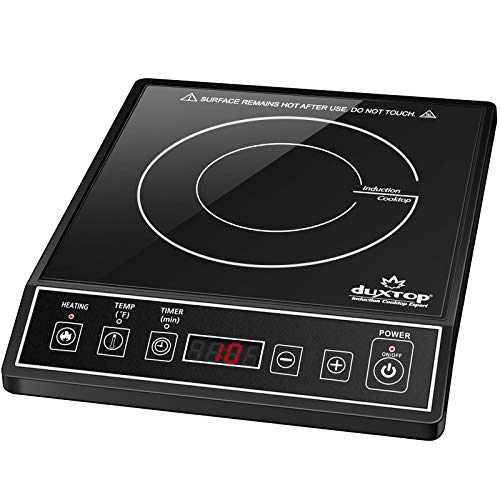
A portable induction cooktop such as the Duxtop 9600LS at $116.99 sets a percentage of its maximum 1,800 watts rather than a temperature, and most reach that percentage by switching fully on and off rather than truly turning down, which is why two pans on the same setting can sit at different temperatures. A gas burner heats the pan and the surrounding air directly with an open flame, giving smoother control at very low output but no wattage ceiling to fall back on. For sauces, candy, and other closely watched indoor cooking, the induction unit paired with a probe thermometer is the more repeatable tool.
Buy an induction cooktop for anything that needs a steady, repeatable heat indoors: sauces, tempering, candy stages, and finishing a sous vide sear. The Duxtop 9600LS costs $116.99, gives 20 power and 20 temperature steps instead of the usual 10, and switches on and off internally to hold a setting rather than asking you to read a flame by eye. A gas range still earns its place for a hard sear or wok-style high heat, since a strong gas burner has no 1,800 watt household circuit to answer to the way a portable induction unit does. For most indoor precision work in a home kitchen, though, a digital percentage you can repeat tomorrow beats a flame height you are guessing at today.
Is a 'medium' setting on an induction cooktop actually a temperature?
No. Every power level on a consumer induction cooktop is a percentage of the unit's maximum wattage, not a temperature reading. The Duxtop 9600LS and most portable units in its price range reach the lower percentages the same way a light dimmer used to: by switching full power fully on and fully off many times a second rather than truly turning the output down. At a setting most people would call "low," the coil may still be delivering full wattage during each on pulse, just for a shorter fraction of the cycle.
- A "3 out of 10" setting is roughly 30 percent of maximum wattage delivered in pulses, not a fixed low temperature
- Two different pans on the identical setting can sit at different temperatures, because a thin pan responds more to each full-power pulse than a heavy one does
- This is why a delicate sauce can scorch on a setting that seems too low to worry about: the pan spikes to full heat between cycles even if the average looks gentle
- The older Duxtop 9100MC at $84.99 only offers 10 coarse steps rather than 20, which makes this duty-cycle swing even more noticeable at the low end
What is mechanically different about how induction and gas put heat into a pan?
Induction runs an alternating current through a coil under the ceramic surface, which induces its own current directly inside a ferromagnetic pan and heats the metal from within. Nothing about the cooktop surface itself gets hot; the pan is the heating element. A gas burner does the opposite: it burns fuel below the pan and transfers that heat to the cookware by direct flame contact and by heating the air around it, which is also why a gas kitchen runs warmer overall and why flame can lick up around a pan's sides and handle. Most portable induction units, including the cheaper Duxtop 9100MC at $84.99, share a household 120 volt circuit that caps them at roughly 1,800 watts, since a standard 15 amp circuit provides exactly that. Gas has no equivalent household electrical ceiling; a burner's output is set by its own orifice and regulator, not by a wall outlet.
| Portable induction | Gas burner | |
|---|---|---|
| Example | Duxtop 9600LS, $116.99 | Existing gas range burner |
| How heat reaches the pan | Current induced directly in the pan itself | Flame heats the pan and the air around it |
| Typical max output | About 1,800 W on a standard 120V circuit | Varies by burner, no household wattage cap |
| How low settings work | On and off duty cycling at a chosen percentage | A genuinely smaller flame, continuously |
| Cookware requirement | Magnetic, ferrous base only | Any pan material |
| Ambient kitchen heat | Stays mostly in the pan | Also heats the surrounding air |
Does a low induction setting actually protect a delicate sauce or melting chocolate?
Not automatically, and this is the case where gas has a real edge on paper: a true low flame stays low continuously, while induction's duty cycling still spikes to full power on every pulse. In practice the fix is not to abandon induction, it is to stop trusting the number on the dial. The Nuwave Pro Chef at $179.99 narrows the gap by stepping in single degree increments across a 100 F to 575 F range rather than ten or twenty coarse power levels, which shortens each duty cycle pulse and evens out the swings. Pairing any induction unit with an instant read thermometer and checking the pan surface or the sauce itself does more for scorching than any setting number, because the display is telling you a percentage of wattage, not the temperature the food is actually experiencing.
Can a portable induction burner replace a gas range for a hard sear or wok cooking?
Usually not at full intensity. A watt converts to about 3.412 British thermal units per hour, so a portable unit capped at 1,800 watts tops out near 6,100 BTU per hour, well under the 12,000 to 18,000 BTU rating printed on the high output burner of many home gas ranges. The Duxtop double induction cooktop at $217.02 makes the gap wider rather than narrower for two-pan cooking: it shares that same roughly 1,800 watt total between both zones, so running two pans hard at once slows both of them down. A gas burner has no such shared ceiling between burners. None of this applies to a hardwired 240 volt induction range built into a kitchen, which draws far more power than any portable countertop unit and can match or beat a gas burner for raw output; the 1,800 watt limit here is specific to plug-in countertop units on a standard circuit.
So which should you actually buy for cooking indoors?
Buy the Duxtop 9600LS if most of what you cook is sauces, eggs, candy, risotto, or a finishing sear after a sous vide bath: the repeatable digital steps beat judging a flame by eye, and at $116.99 it costs less than a single burner repair on most gas ranges. Step up to the Nuwave Pro Chef at $179.99 if you want the finest possible control for tempering chocolate or holding a candy stage exactly, since its single degree steps shorten the duty cycle swings that trip up cheaper units. If your cooking regularly means wok tossing over very high heat or searing multiple pans at once, keep using a gas range or a hardwired induction range instead of a portable unit: the 1,800 watt household circuit cap, and the way a double burner splits that total between two zones, both work against you at the high end.
Gear that fits these numbers
Everything mentioned on this page
Duxtop Portable Induction Cooktop 9100MC
The cheap workhorse. Good for boiling and searing, coarse for anything that needs a held temperature.

Duxtop Double Induction Cooktop 9620LS
Two zones on one plug, which means the total wattage is shared. Running both hard at once is slower than running either alone.

Nuwave Pro Chef Induction Cooktop
Single degree control across a wide range, which is the closest a portable hob gets to the behaviour of a dedicated temperature controller.

ThermoWorks Thermapen ONE
One second and half a degree. On a page about pasteurization that accuracy is not a luxury, it is the difference between a figure meaning something and not.
Prices when last checked. They change often.
Frequently asked questions
Does induction cooking require special pots and pans?
Yes. Induction only works with cookware that a magnet sticks to, since the cooktop induces current directly in the metal base rather than heating the surface itself. Cast iron, most stainless steel with a magnetic base, and enameled steel all work. Pure aluminum, copper, and glass cookware do not, and will not register any heat at all on an induction burner unless it has a bonded ferrous plate on the bottom.
Why does the same numbered setting scorch a sauce in one pan but not another?
Because induction reaches a lower setting by switching full power on and off rather than genuinely reducing output, and different pans respond differently to that pulsing. A thin, light pan spikes closer to the coil's full temperature during each on-cycle than a heavy pan with more thermal mass, which spreads the same pulses out more evenly. The setting number is identical in both pans; the result at the food is not.
How does a portable induction unit's wattage actually compare to a gas burner's output?
A watt equals about 3.412 British thermal units per hour, so a portable unit capped near 1,800 watts on a standard household circuit tops out around 6,100 BTU per hour. Many home gas ranges rate their strongest burner between 12,000 and 18,000 BTU, roughly two to three times higher. A hardwired 240 volt induction range is a different comparison and can exceed gas output; this gap is specific to plug-in countertop units.
Can I run two pans at full power on a double induction burner at the same time?
Not both at their individual maximums. A double unit like the Duxtop 9620LS shares one roughly 1,800 watt household circuit connection between its two zones, so pushing both pans hard at once divides that total rather than doubling it. For two dishes that both need high heat at the same time, a two-burner gas range or two separate single-zone induction units on different circuits will get there faster.
Does induction heat up the kitchen the way a gas range does?
No. Induction puts almost all of its energy directly into the pan through induced current, so very little heat escapes into the surrounding air or the cooktop surface itself, which stays cool to the touch except where the hot pan has been sitting. A gas flame heats the pan by direct contact and combustion, and a meaningful share of that heat escapes into the kitchen air, which is part of why a gas kitchen runs noticeably warmer over a long cooking session.
Is a portable induction cooktop safe to leave running unattended for a long simmer?
It is safer than an open flame in one respect, since there is no live fire and the surface itself does not stay hot once the pan is removed, but it is still an appliance drawing close to its rated maximum current and should be treated like any other. Keep it clear of paper, cloth, and flammable containers, place it on a stable, heat-tolerant surface, and follow the manufacturer's guidance on running it for extended periods.
Sources
Published figures, quoted as published. We do not generate our own time and temperature data.
How we research: we compare manufacturer specifications, owner manuals, published USDA and FSIS figures and recurring themes in verified owner reviews. We do not cook test batches or run instruments, and nothing here is professional food safety advice. When a figure is not published by a source we trust, we say so rather than estimate one.