Thermapen ONE vs ThermoPop 2: which instant read thermometer to buy
The Thermapen ONE reads in about one second to within half a degree Fahrenheit and costs $125.00, while the ThermoPop 2 takes two to three seconds to within about 0.9 F and costs $47.00. For sous vide checks, candy stages, and pulling poultry right at temperature, the extra speed and accuracy of the Thermapen ONE earns its price; for everyday roasts and grilling, the ThermoPop 2 is close enough for a third of the cost.
Buy the Thermapen ONE if you check temperature often enough that a couple of seconds actually adds up, or if you work close to a safety line where half a degree of accuracy matters: sous vide finishing checks, candy stages, pasteurized eggs, or poultry pulled within a degree of 165 F. At $125.00 it reads in about one second to within plus or minus 0.5 F, which on a page about pasteurization and doneness is not a luxury spec, it is the difference between a number meaning something and not. The ThermoPop 2 costs $47.00, a third of the price, reads in two to three seconds to within about 0.9 F, and covers everyday roasts, steaks, and bread doneness checks without a meaningful gap in the result. Most home cooks who buy one thermometer and never think about it again should buy the ThermoPop 2; anyone doing frequent precision work, sous vide, or candy should spend the extra on the Thermapen ONE.
How much does one second versus three seconds actually matter?
A probe thermometer does not report the true internal temperature instantly; it reports whatever the sensor tip has settled to by the moment you read the display. The Thermapen ONE settles in about one second, so pulling it at two seconds gives you essentially the final number. The ThermoPop 2 takes two to three seconds to settle, which means a two second glance can still be climbing toward the true reading rather than sitting on it. A thermometer that takes four seconds to fully settle and gets pulled at two will read low on the way up and high on the way down past the target, which is the exact mechanism behind most "my thermometer lied to me" complaints.
- Fast checks on thin cuts, shrimp, or scallops benefit most from the one second read, since the window to catch the correct temperature is short
- Repeated checks across a big cook, like probing several roasts or a full tray of pastry, add the time difference up fast over a dozen checks
- A slower read matters less on a thick roast that changes temperature gradually, since a two second wait barely shifts the number
- The older Classic Thermapen reads in about 3 seconds to within 0.7 F, which sits between these two if you already own one and are deciding whether an upgrade is worth it
Thermapen ONE vs ThermoPop 2, spec for spec
Both thermometers come from ThermoWorks and share a similar folding probe design, but the internals are different enough to explain the price gap.
| Thermapen ONE | ThermoPop 2 | |
|---|---|---|
| Price | $125.00 | $47.00 |
| Read time | About 1 second | 2 to 3 seconds |
| Accuracy | Plus or minus 0.5 F | Plus or minus 0.9 F |
| Display | Auto-rotating, backlit | Rotating |
| Water rating | IP67 | Not independently rated |
| Best for | Frequent checks, safety-critical margins | Occasional checks, everyday cooking |
Does half a degree of accuracy actually matter in a home kitchen?
It matters most exactly where the margin is already thin. USDA published safe minimum internal temperatures include 165 F for poultry, 160 F for ground meat, 145 F with a three minute rest for whole muscle beef, pork, lamb and veal, 145 F for fish, and 160 F for eggs; pasteurization at lower hold temperatures follows the USDA FSIS Appendix A lethality tables, which we do not reproduce here since they depend on exact time as well as temperature. A thermometer reading half a degree low near one of those lines is a rounding error nobody notices. A thermometer reading closer to a full degree off, stacked with a few seconds of settling time still climbing, is the gap between a chicken breast that is actually done and one that reads done. Candy work sits on the same knife edge: soft crack, hard crack, and caramel stages each span only a handful of degrees, and the Thermapen ONE's half degree accuracy holds up better there than the ThermoPop 2's wider tolerance.
How do you actually get a correct reading with either thermometer?
The thermometer's own speed and accuracy only help if the probe goes in correctly. Measure at the thickest point of the food, away from bone and away from the side of the pan or bag, since both act as heat sinks or heat sources that skew a nearby reading. Push the probe tip past the center of the cut, then withdraw it slowly while watching the display for the lowest number it shows: that lowest point is the true core temperature, and anything higher on the way out is a warmer zone closer to the surface. This technique matters more with the ThermoPop 2 than the Thermapen ONE, since the slower settling time means a quick stab-and-read is more likely to catch a number that has not finished climbing or falling yet.
So which one should you actually buy?
Buy the Thermapen ONE at $125.00 if you cook sous vide often, work through candy stages, or routinely check poultry within a degree of the 165 F safe minimum, since the one second read and half degree accuracy remove the guesswork exactly where it matters most. Buy the ThermoPop 2 at $47.00 if you want one reliable instant read thermometer for roasts, steaks, and bread doneness without spending three times as much, since a two to three second read and 0.9 F accuracy cover that work without a meaningful gap in the result. If your existing thermometer is a dial probe that takes fifteen or twenty seconds to settle, either ThermoWorks model is a large upgrade over what you have now, and the choice between them comes down to how often you use it rather than what either one is capable of.
Gear that fits these numbers
Everything mentioned on this page
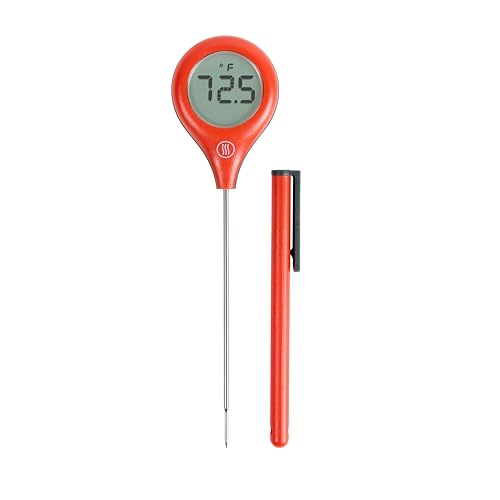
ThermoWorks ThermoPop 2
A third of the Thermapen price for most of the useful accuracy. The right pick if you are buying your first real thermometer.
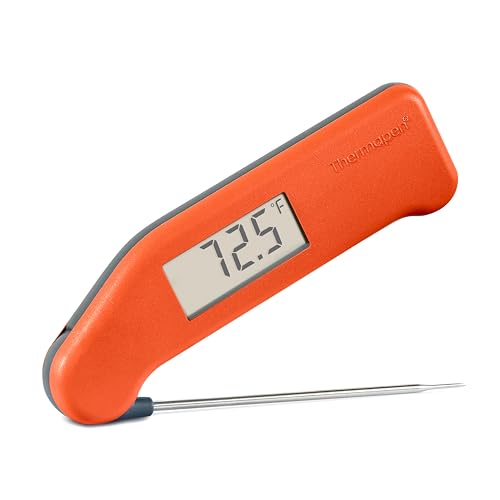
ThermoWorks Classic Thermapen
The older Thermapen, slower than the ONE and still more accurate than almost everything else on a kitchen counter.
Prices when last checked. They change often.
Frequently asked questions
Is the Thermapen ONE worth almost three times the price of the ThermoPop 2?
For frequent, precision-sensitive work, yes. The half degree accuracy and one second read time pay for themselves fastest in sous vide finishing checks, candy stages, and poultry pulled close to a safe minimum, where a couple of degrees of lag or error actually changes the outcome. For someone who checks a roast a few times a month, the ThermoPop 2's 0.9 F accuracy and two to three second read do not create a noticeable gap, and the savings are hard to argue with.
Can I leave either thermometer in the food while it cooks in an oven or air fryer?
No. Both the Thermapen ONE and the ThermoPop 2 are instant read thermometers built for a quick spot check, not a leave-in probe rated for oven or air fryer heat over a long cook. For continuous monitoring inside an appliance, a wireless leave-in probe thermometer is the right tool, and checking two of those against each other is a separate comparison from this one.
What is the actual USDA safe minimum temperature for chicken?
The USDA published safe minimum internal temperature for poultry is 165 F, measured at the thickest part of the meat away from bone. Neither thermometer enforces that number for you; both simply report whatever temperature the probe tip has reached, so the responsibility for hitting 165 F and reading it correctly still sits with the cook and the probe placement.
How do I check whether an instant read thermometer is still accurate?
The simplest check is an ice bath: pack a glass with ice and add just enough water to fill the gaps, stir, and wait about thirty seconds before inserting the probe. A properly calibrated thermometer should read 32 F, or within its stated accuracy of that number. Both ThermoWorks models can drift slightly with age or a hard drop, and this check takes under a minute.
Does the rotating display on either thermometer actually matter?
It matters more than it sounds like it should. Both the Thermapen ONE and the ThermoPop 2 rotate their display to stay upright no matter which way the probe is turned, which means you can insert the probe from any angle, including straight down into a pot, and still read the number right side up without twisting your wrist to see it.
Which one is better for candy making, like soft crack or hard crack stages?
The Thermapen ONE holds an edge here because candy stages are only a few degrees apart and a probe thermometer clipped to the pot needs to be trusted at a glance. Its half degree accuracy leaves less room for a stage to be misread than the ThermoPop 2's 0.9 F tolerance, though either will outperform a bulb candy thermometer that is slow to respond and hard to read precisely.
Sources
Published figures, quoted as published. We do not generate our own time and temperature data.
How we research: we compare manufacturer specifications, owner manuals, published USDA and FSIS figures and recurring themes in verified owner reviews. We do not cook test batches or run instruments, and nothing here is professional food safety advice. When a figure is not published by a source we trust, we say so rather than estimate one.