ThermoWorks Thermapen ONE review: a one second reading for precision cooking
The ThermoWorks Thermapen ONE costs $125.00, reads a temperature in about one second, and is accurate to within plus or minus 0.5 F, which is the resolution that makes a pasteurization or doneness figure mean something rather than a rounded guess.
The ThermoWorks Thermapen ONE costs $125.00 and its entire case rests on two numbers: a one second read time and accuracy to within half a degree Fahrenheit. Neither number matters much for a roast that spends an hour in the oven. Both matter enormously for indoor precision cooking, where a sous vide bath, an air fryer basket, or a combi oven is being run at a specific target and a slow or imprecise thermometer either lies to you about whether you have hit that target or makes you hold the probe in long enough to drop the food's actual temperature while you wait for a reading.
Why does read speed matter for sous vide and combi oven cooking specifically?
Opening a combi oven door or lifting food out of a sous vide bath to check its temperature costs you heat every second the probe takes to settle. A thermometer that takes 8 to 10 seconds to stabilize means 8 to 10 seconds of the food cooling in open air before you get a number, which on a delicate item like a custard or a piece of fish can be the difference between an accurate reading and one that undersells how done the food actually is. The Thermapen ONE's one second read time keeps that exposure short enough that the reading reflects the food's real internal temperature rather than a temperature already drifting toward room air.
| Specification | Value |
|---|---|
| Read time | 1 second |
| Accuracy | Plus or minus 0.5 F |
| Water resistance | IP67 |
| Price | $125.00 |
How does half a degree of accuracy actually matter on a pasteurization page?
USDA published safe minimum internal temperatures are exact figures: 165 F for poultry, 160 F for ground meat, 145 F with a 3 minute rest for whole muscle beef, pork, lamb and veal, 145 F for fish, and 160 F for eggs. Those figures come from the USDA FSIS Appendix A lethality tables, and we do not reproduce the underlying hold times here. A thermometer accurate to plus or minus 2 F, which is common on cheaper dial or probe thermometers, can read 145 F when the food is actually at 143 F, a gap that matters when the number on the dial is the only thing standing between a safe cook and an unsafe one. The Thermapen ONE's half degree accuracy closes that gap enough that the number you read is close enough to trust against the published figure. Pair it with the pasteurization time and temperature calculator rather than guessing at hold times from memory.
Is an instant read thermometer still useful once you own a wireless probe system?
Yes, and they solve different problems. A wireless system like the Typhur Sync 2 probe or the MEATER Pro Duo stays in the food for the entire cook and reports a running temperature to your phone, which is what you want for a long roast or a closed combi oven where opening the door to spot check costs heat. An instant read thermometer is for the spot check itself: confirming a sous vide bath actually reached its set point, checking a second or third piece of food in the same air fryer basket that the wireless probe is not monitoring, or verifying doneness at the very end of a cook. Most serious indoor cooks eventually own both rather than treating one as a replacement for the other.
What does the Thermapen ONE actually cost you compared to the cheaper ThermoWorks options?
The ThermoPop 2 at $47.00 is roughly a third of the Thermapen ONE's price and reads in 2 to 3 seconds at plus or minus 0.9 F accuracy, which is a real step down in speed and precision but still meaningfully better than a generic drugstore thermometer. The Classic Thermapen at $105.00 sits in between, reading in about 3 seconds at plus or minus 0.7 F. The gap between all three and a cheap $10 dial thermometer is larger than the gap between them and each other, so the real decision most buyers face is whether to spend anything on an accurate instant read thermometer at all, not which ThermoWorks model to pick.
| Thermapen ONE | Classic Thermapen | ThermoPop 2 | |
|---|---|---|---|
| Read time | 1 second | 3 seconds | 2 to 3 seconds |
| Accuracy | Plus or minus 0.5 F | Plus or minus 0.7 F | Plus or minus 0.9 F |
| Price | $125.00 | $105.00 | $47.00 |
Who should buy the alternatives instead?
If budget is the deciding factor and a few seconds of extra wait and a degree of extra tolerance do not bother you, buy the ThermoPop 2 instead: it covers the same core USDA temperature checks at well under half the price. If you are monitoring a long cook and want to walk away from the kitchen rather than stand over it with a probe in hand, buy a wireless system like the CHEF iQ Sense or the Typhur Sync 2 probe and keep an instant read thermometer only for spot checks. The Thermapen ONE is the right buy when speed and accuracy both matter and you are willing to pay for both rather than compromise on either.
Gear that fits these numbers
Everything mentioned on this page
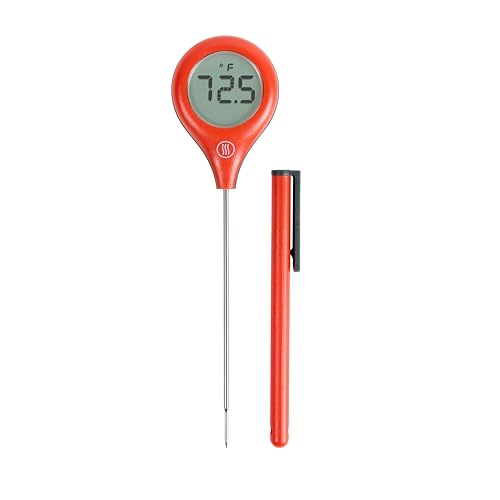
ThermoWorks ThermoPop 2
A third of the Thermapen price for most of the useful accuracy. The right pick if you are buying your first real thermometer.
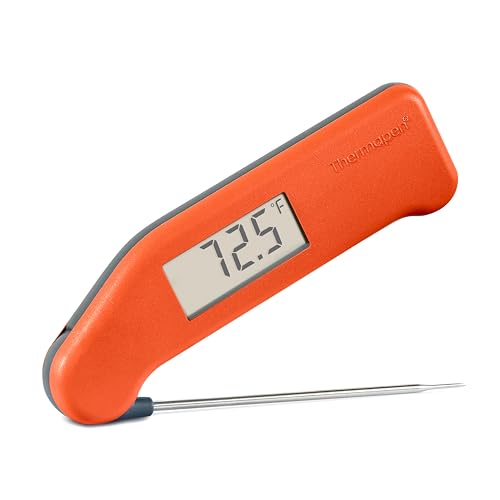
ThermoWorks Classic Thermapen
The older Thermapen, slower than the ONE and still more accurate than almost everything else on a kitchen counter.

Typhur Sync Gold Wireless Thermometer, 2 Probes
Slim probes leave a smaller hole, which matters more in a vacuum bag than it does in a roast.

MEATER Pro Duo Wireless Thermometer
Fully wireless probes with no trailing cable, which is what you want in an air fryer basket or a closed combi oven.

CHEF iQ Sense Smart Wireless Thermometer, 3 Probes
Three thin probes and a WiFi hub, so you can leave the house during a long cook and still see the curve.
Prices when last checked. They change often.
Frequently asked questions
Is the Thermapen ONE waterproof enough to rinse under a tap?
It carries an IP67 rating, which means it is protected against temporary submersion in shallow water, so rinsing it under a tap after checking raw poultry is within its published rating. It is not rated for extended submersion or dishwashing, and the manual specifies wiping with sanitizer as the recommended cleaning method between uses on different proteins.
Does the Thermapen ONE work for both sous vide bath verification and probing finished food?
Yes, both uses are the same function: inserting the thin probe tip and reading a fast, accurate temperature. For a sous vide bath, clip or hold the probe in the water away from the circulator's own sensor to confirm the bath actually reached its displayed set point, since two sensors reading the same bath is the only way to catch a miscalibrated circulator.
How is the Thermapen ONE different from a probe thermometer I leave in the oven the whole time?
The Thermapen ONE is an instant read device meant for quick spot checks, not continuous monitoring, and its probe is not designed to stay inside food in a hot oven for an extended cook. A leave in probe system, wired or wireless, is built for that continuous role instead. Most kitchens use both: a leave in probe for the long cook and an instant read for the final check.
Why does the USDA published safe minimum for ground meat differ from whole muscle cuts?
Grinding meat mixes surface bacteria throughout the interior, so ground meat needs to reach 160 F to eliminate pathogens that a whole muscle cut, where bacteria live mostly on the exterior, does not carry internally. Whole muscle beef, pork, lamb and veal reach a safe minimum at 145 F with a 3 minute rest, a lower number that reflects the different contamination pattern, per the USDA FSIS Appendix A lethality tables.
Can the Thermapen ONE replace a wireless meat thermometer for a long roast?
Not practically. It has no probe left in the food, no app connection, and no alert when a target temperature is reached, so using it for a multi hour roast means repeatedly opening the oven to spot check, which loses heat each time. A wireless system such as the MEATER Pro Duo or Typhur Sync 2 is the better tool for continuous monitoring, with the Thermapen reserved for the final confirmation.
Does battery type affect how reliable the Thermapen ONE is over time?
The Thermapen ONE runs on a replaceable battery, and ThermoWorks specifies the expected battery life in the manual based on typical daily use. A weak battery can affect display brightness before it affects reading accuracy, so a dim screen is usually the first sign it is time to replace the battery rather than a sign the sensor itself has drifted.
Sources
Published figures, quoted as published. We do not generate our own time and temperature data.
How we research: we compare manufacturer specifications, owner manuals, published USDA and FSIS figures and recurring themes in verified owner reviews. We do not cook test batches or run instruments, and nothing here is professional food safety advice. When a figure is not published by a source we trust, we say so rather than estimate one.