Ginger slices dehydrator time and temperature
Dehydrate ginger slices at 125 F for 6 to 10 hours at about 3 mm thick. Time scales with thickness: slices twice as thick take roughly twice as long, and a humid kitchen adds around a quarter again. These are manufacturer manual ranges, so treat the finished texture as the real test.
Temperature, time and thickness
| Condition | Temperature | Time |
|---|---|---|
| Standard, 3 mm slices | 125 F | 6 to 10 h |
| Thicker, 6 mm slices | 125 F | 6 to 10 h |
| Humid kitchen | 125 F | 3.8 to 6.3 h |
How to tell when it is actually done
Take a piece out and let it cool completely before judging it. Warm food feels drier than it is, and the most common failure is pulling a tray early, sealing it, and finding condensation in the jar two days later. Properly dried fruit is leathery and bends without snapping. Vegetables should be brittle. If a jar sweats after a day, the contents go back in the machine.
Gear that fits these numbers
What this job needs

Excalibur Performance Series Food Dehydrator, 10 Tray
The square box with horizontal airflow that every long form drying guide is written around.
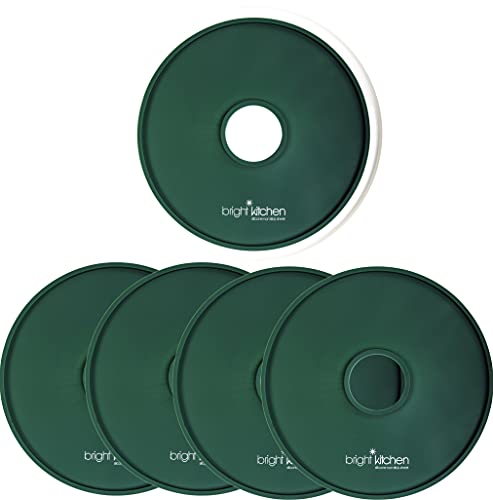
Fruit Leather Silicone Dehydrator Sheets, 4 Pack
Raised edges are the difference between fruit leather and fruit puree in the bottom of your dehydrator.

BOMATA Large Kitchen Scale, 0.1 Gram
Tenth gram resolution across a full 11 pound range, which most precision scales give up.
Prices when last checked. They change often.
Frequently asked questions
How long does ginger slices take to dehydrate?
6 to 10 hours at 125 F. These are manufacturer manual ranges, and the real test is the finished texture: properly dried fruit is leathery rather than tacky, and a piece that feels dry while warm can feel damp once it cools.
What if I cut the slices thicker?
Time goes up roughly in proportion to thickness. Doubling from 3 mm to 6 mm moves the range to about 6 to 10 hours. A humid kitchen adds around a quarter again on top of that, which is why the same recipe behaves differently in different seasons.
Where do the numbers on this page come from?
Manufacturer manual ranges, adjusted for slice thickness and kitchen humidity. Nothing here comes from cooking test batches in our own kitchen, and we do not claim otherwise. Where the USDA or FSIS publishes a figure we quote it and link the source. Where we have no defensible figure we say so rather than estimate one.
Sources
Published figures, quoted as published. We do not generate our own time and temperature data.
How we research: we compare manufacturer specifications, owner manuals, published USDA and FSIS figures and recurring themes in verified owner reviews. We do not cook test batches or run instruments, and nothing here is professional food safety advice. When a figure is not published by a source we trust, we say so rather than estimate one.