The air fryer mistakes that ruin a batch, and how to fix them
Crowding the basket is the single biggest cause of a bad air fryer batch: food that touches will not brown and food that blocks airflow steams instead of crisping, so cook in a single layer with space between pieces and run two batches rather than piling everything into one.
Almost every air fryer complaint traces back to a small handful of repeatable mistakes, and one of them shows up more than all the others combined: cramming a full portion of food into a basket built to move air around a single layer. Fixing the basket load also makes the rest of this list easier to catch, because a properly loaded basket is the one where a missed preheat, the wrong temperature, or an unwatched sweet treat becomes obvious on its own instead of getting blamed on the machine.
Why is crowding the basket the worst mistake on this list?
Two separate failures happen at once when a basket is overloaded. Pieces of food touching each other block airflow exactly where they meet, so that contact point never browns no matter how long the cycle runs. Pieces stacked deep enough to block the fan's path entirely trap steam underneath, so the bottom of the pile effectively cooks in its own vapor while the top browns normally. The fix is a genuine single layer with visible gaps between pieces, and two smaller batches instead of one large one. A two zone machine like the Ninja DZ550 or the Ninja DZ302 removes the batching problem for two different foods by giving each its own chamber and airflow rather than making you choose between crowding or waiting.
| Mistake | What it does to the food | The fix |
|---|---|---|
| Crowding the basket | Touching pieces do not brown; blocked airflow steams the pile | Single layer, visible gaps, run two batches |
| Skipping the preheat | Crust forms minutes late instead of immediately | Preheat the empty basket a few minutes before crisp foods |
| Cooking wet or marinated food straight from the fridge | Surface moisture steams before it can brown | Pat the surface dry and use a light oil coating, not a soak |
| Trusting the timer over a thermometer | Proteins come out undercooked or dry despite a browned surface | Probe the thickest part and cook to the published safe temperature |
| Baking something that rises at oven temperature | The fan sets the crust before the middle can lift | Drop well below the standard conversion, closer to 320 F for cookies |
| Drenching food in oil | Oil pools, smokes, and can leave food greasy instead of crisp | A teaspoon to a tablespoon, tossed or misted, is usually enough |
Does skipping the preheat actually matter, or is it just a suggestion?
It matters for anything you actually want crisp. Preheating brings the basket and chamber up to temperature before food goes in, so the surface starts losing moisture and browning immediately rather than several minutes late while the machine catches up. For something that is already cooked and just needs reheating, like a frozen appetizer, the difference is small. For fresh cut potatoes or breaded chicken, a missed preheat is often the entire reason a batch came out pale instead of crisp.
Why does breaded or marinated food come out soggy no matter what I do?
Surface moisture is the enemy of crisping in an air fryer the same way it is in a hot pan: water on the surface has to evaporate before browning can start, and that delay eats into the same short window that is supposed to be building a crust. Pat marinated or breaded food dry with a paper towel before it goes in the basket, and use a light coating of oil rather than letting a wet marinade sit on the surface. This is doubly true for anything frozen with visible ice crystals, since that ice becomes surface water the moment it hits the hot air.
Why did my cookies or muffins bake unevenly instead of rising properly?
Anything that rises, cookies, cakes, quick breads, bakes badly at the temperatures the standard oven conversion suggests, because the air fryer's aggressive fan sets and browns the crust before the interior has had time to lift and firm up its structure. The result is a dense or undercooked center hiding under a fully browned top. Cookies specifically want closer to 320 F, noticeably lower than subtracting 25 F from a typical 350 F oven recipe would produce, and even then a single test cookie before committing a full tray is worth the extra few minutes.
Why does chicken sometimes look done but taste undercooked, or the reverse?
A browned surface and a fully cooked center are two different things in an air fryer, more so than in a conventional oven, because the fan browns the outside quickly while the inside still has to catch up on its own schedule. Relying on the printed time instead of a probe thermometer is how a breast ends up pink at the bone or, in the other direction, dry from extra minutes added out of caution. Use an instant read thermometer on the thickest part and cook to 165 F for poultry, 160 F for ground meat, or 145 F with a three minute rest for whole muscle beef, pork, lamb and veal.
Am I using too much oil, or the wrong kind?
Probably too much. An air fryer needs only a light coating, a teaspoon to a tablespoon tossed through the food or applied with a mister, because the appliance is relying on moving hot air to brown the surface rather than an oil bath to transfer heat. A heavy pour pools in the bottom of the basket, can smoke at typical air fryer temperatures, and paradoxically leaves food greasy rather than crisp because the excess oil never fully renders off. A high smoke point oil in a small amount does the job; a drenched piece of food does not crisp faster for the extra oil.
Gear that fits these numbers
Everything mentioned on this page

Ninja Foodi DZ302 DualZone Air Fryer, 10 Quart
Same two basket layout without the probe. If you already own an instant read, the saving is real and you lose nothing.

Ninja Crispi Glass Air Fryer
Cooks in the glass container you then store and reheat in, which removes the step where a basket fryer forces you to dirty a second dish.

Cosori TurboBlaze Air Fryer, 6 Quart
A ceramic, PFAS free basket, which is the reason to pick it over the Ninja equivalents if coating chemistry matters to you.

ThermoWorks Thermapen ONE
One second and half a degree. On a page about pasteurization that accuracy is not a luxury, it is the difference between a figure meaning something and not.
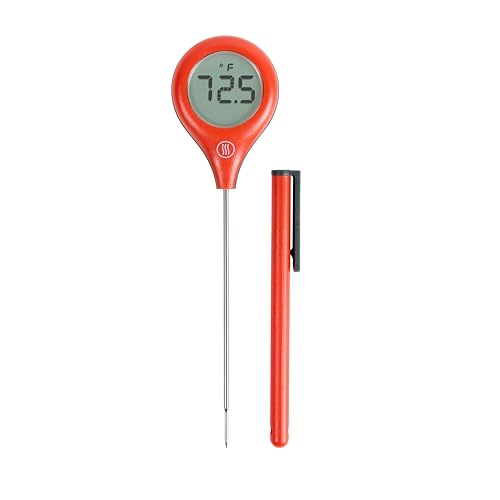
ThermoWorks ThermoPop 2
A third of the Thermapen price for most of the useful accuracy. The right pick if you are buying your first real thermometer.
Prices when last checked. They change often.
Frequently asked questions
Why does my air fryer smoke when I cook something fatty?
Rendered fat dripping onto a hot heating element or the bottom of the basket is the usual cause, and it happens more with bacon, wings, or heavily marbled cuts than with lean food. Some manufacturers recommend a small amount of water in the bottom tray, below the basket, to keep drippings from scorching directly on a hot surface. If smoking continues, the basket likely needs cleaning between uses, since built up grease from previous cooks smokes at a lower temperature than fresh fat.
How much oil should I actually use in an air fryer?
A teaspoon to a tablespoon, tossed through the food or applied with a mister, is usually enough for a full basket of vegetables or a breaded protein. The goal is a thin, even coating rather than a visible pool, since the appliance browns food with moving air, not submerged oil. Add slightly more for very lean or very dry foods, and less for anything already fatty like wings or bacon.
Can I stack food in layers using a rack accessory?
Only with a rack designed and sold for your specific model, since generic stacking blocks the airflow the appliance depends on and can leave the bottom layer steaming rather than crisping. Even with a proper rack, expect the layers to cook unevenly and plan to rotate or swap them partway through rather than assuming both layers finish at the same time.
Why do frozen foods sometimes crisp better than fresh ones?
The ice on a frozen food's surface flashes into steam and lifts away almost immediately when it hits the hot moving air, which can actually help create a crisp crust faster than a fresh, slightly moist surface does. This is why most frozen appetizer packaging says not to thaw first: thawing reintroduces the surface moisture that the ice would otherwise remove on its own.
Is it a mistake to open the basket partway through cooking to check on food?
No. Opening the basket briefly to shake, flip, or check doneness causes a short temperature dip that most air fryers recover from within a minute, and it is far less risky than guessing and pulling out an undercooked or overdone batch. Shaking halfway through is recommended for most foods anyway, since it redistributes pieces and reduces the unevenness crowding can cause.
Why does the exact same recipe come out different every time I make it?
Small variables add up more in an air fryer than in a larger oven: how full the basket is, how cold the food was going in, whether the basket was preheated, and even how much moisture was on the food's surface all shift the result. Treat a written recipe as a starting point rather than a fixed formula, and use a thermometer for proteins so the outcome is judged by an actual number rather than by how closely it matches last time.
Sources
Published figures, quoted as published. We do not generate our own time and temperature data.
How we research: we compare manufacturer specifications, owner manuals, published USDA and FSIS figures and recurring themes in verified owner reviews. We do not cook test batches or run instruments, and nothing here is professional food safety advice. When a figure is not published by a source we trust, we say so rather than estimate one.