Fermentation troubleshooting: mold, smell, and when to throw a batch out
Mold on a vegetable ferment almost always means something floated up above the brine and got exposed to air, so a weight that keeps everything submerged prevents most of it before it starts. A ferment that smells of solvent, looks slimy, or has fuzzy growth on it should be thrown away entirely rather than rinsed off and eaten, since judging a ferment by taste and smell matters far more than judging it by a date on the calendar.
Almost every fermentation failure traces back to the same root cause: something was not fully submerged. Mold needs air to grow, and a piece of cabbage or a cucumber that floats above the brine line is exposed to exactly the air it needs. Keep everything under the liquid with a real weight, such as a set of glass fermentation weights, and most of the failures on this page never happen in the first place. When something does go wrong anyway, the rule is simple: fine on smell and taste stays, anything with fuzzy growth, sliminess, or a solvent smell goes in the bin, whole, not rescued by rinsing.
There is mold on top of my ferment. What actually caused it, and is the batch ruined?
Mold almost always means a piece of vegetable, or a film of the brine itself, was sitting above the liquid line where air could reach it. Mold spores need oxygen, and a fully submerged ferment simply does not offer them anywhere to land and grow. This is why the fix is mechanical rather than chemical: a weight, such as glass fermentation weights or the weighted stones that come with a crock like Kenley's, holds every piece of vegetable below the brine for the entire fermentation, and that alone prevents the large majority of mold problems before they start. If mold does appear, do not try to skim it off and continue: the safe approach is to discard the whole batch rather than assume the mold stayed on the surface, since it can send fine filaments down into the ferment that are not visible from the top.
What does a bubbling airlock actually mean, and do I need one?
An airlock lets carbon dioxide produced by the fermentation escape without letting air back in the other direction. That one-way valve is the whole point: fermentation produces gas continuously as lactic acid bacteria work, and a sealed jar with no way to vent that gas can build pressure and even push the lid off or crack the jar. A silicone airlock lid or a stainless fermentation lid both do this automatically, with no need to open the jar and burp it by hand, and the same water-channel principle is built directly into the lid of a dedicated crock like Kenley's half gallon or a two gallon stoneware crock. Bubbling through the airlock is a sign the fermentation is active, not a warning sign on its own, and a slow or stopped bubble rate later in the process is often just the fermentation naturally winding down as the acid level rises.
How do I actually tell if a ferment has gone bad enough to throw out?
Trust smell and appearance over any single sign in isolation, and treat certain signs as non-negotiable. A ferment that smells like nail polish remover or paint thinner, one that has turned visibly slimy rather than just soft, or one with fuzzy growth of any color on the surface should be thrown away completely. Do not rinse off the surface and eat what is underneath: mold and the smells above both indicate that the environment inside the jar has gone wrong in a way that a rinse cannot undo, since problems below the visible surface are not something you can see or taste for safely. A normal, healthy ferment smells tangy and sour, sometimes strongly so, and that sourness is not a warning sign, it is the lactic acid doing its job.
| Sign | What it means |
|---|---|
| Tangy, sour, slightly yeasty smell | Normal. This is the lactic acid fermentation working as intended. |
| Cloudy brine, small bubbles rising | Normal. Cloudiness and bubbling both indicate active fermentation. |
| Fuzzy growth, any color, on the surface | Discard the entire batch. Do not rinse and continue. |
| Slimy texture on the vegetable itself | Discard the entire batch. |
| Smell of solvent, nail polish, or paint thinner | Discard the entire batch immediately. |
How do I know when a ferment is actually finished, if not by counting days?
Taste it. A date on a calendar tells you nothing about the actual state of a specific jar in a specific kitchen, because kitchen temperature is the real driver of how fast a ferment moves: a warm kitchen can finish a batch in a matter of days, while the same recipe in a cool kitchen can take weeks to reach the same level of sourness. Start tasting once you see steady bubbling or cloudiness developing, and keep tasting every few days after that. When the flavor and texture are where you want them, move the jar to the refrigerator, where the cold slows the fermentation down to a near stop and the ferment holds at that flavor for a long time afterward.
Gear that fits these numbers
Everything mentioned on this page

Kenley 1 Gallon Fermentation Crock
A water channel lid lets carbon dioxide escape while nothing gets back in, which is the whole trick of an open crock ferment.

Kenley Half Gallon Fermentation Crock
Half a gallon is about one large cabbage, which is the right first batch size before you find out whether you like sauerkraut enough to make gallons.
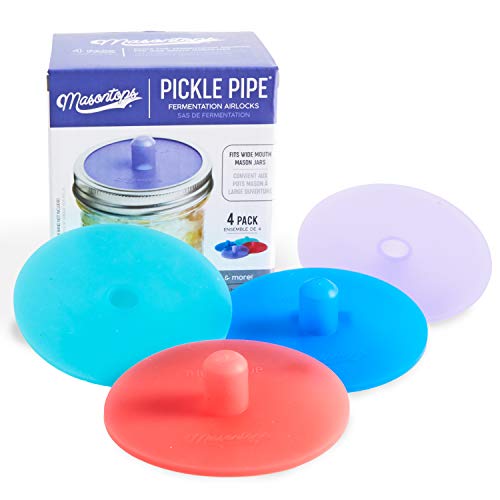
Masontops Pickle Pipes Airlock Fermentation Lids
A one piece silicone airlock with nothing to disassemble, which is why these survive in kitchens where three part airlocks get lost.
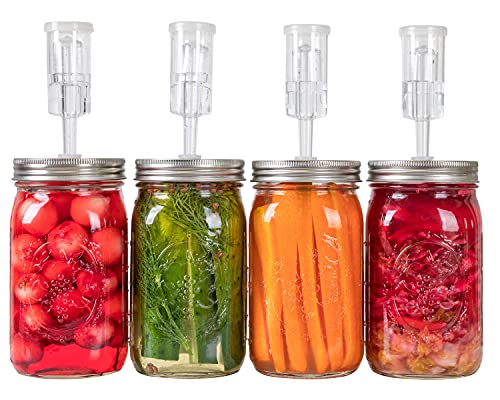
Jillmo Stainless Fermentation Lids, 4 Pack
Stainless rather than plastic, for brines acidic enough to matter over a long ferment.
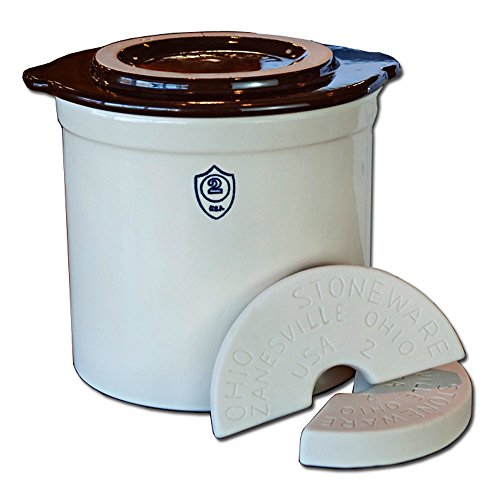
Ohio Stoneware 2 Gallon Crock Kit
Two gallons of American stoneware, for the point where you ferment by the case rather than by the jar.
Prices when last checked. They change often.
Frequently asked questions
Is heavy bubbling and brine overflowing the jar a sign something is wrong?
No, this is usually just an active fermentation producing more carbon dioxide than the jar has room for, especially in a warm kitchen where the process runs faster. Sit the jar on a plate or tray to catch any overflow, and make sure the lid can vent gas, either through an airlock or by burping a plain lid by hand. Overflow on its own is not a sign of spoilage; the smell and appearance of the ferment itself are what actually tell you whether something has gone wrong.
Can I scrape mold off the top and keep eating what is underneath?
No. Mold on a fermented vegetable should mean the whole batch gets discarded rather than skimmed and rescued, because mold can extend filaments down into a ferment that are not visible from the surface, and some molds produce compounds that spread beyond where the visible growth appears. This is different from advice you may see for some aged foods; for a home vegetable ferment, any fuzzy growth on top means the jar goes in the bin.
My ferment is not bubbling much. Does that mean it is not working?
Not necessarily. Bubbling is a visible sign of an active fermentation, but the rate varies with temperature, salt level, and how far along the process already is, and a ferment can be working steadily with very little visible gas. Judge progress by taste and smell over the following days rather than by how much bubbling you can see, and give it more time before assuming a lack of bubbles means a failed batch.
How long can a finished ferment sit on the counter before I refrigerate it?
Move it to the refrigerator as soon as it tastes the way you want, rather than leaving it out to see if it improves further, since the fermentation keeps progressing at room temperature and can move past the flavor and texture you were aiming for within a day or two. Refrigeration slows the process to a near stop, which is what lets a finished batch hold its flavor for weeks afterward instead of continuing to sour.
Why did my ferment turn slimy instead of just soft?
Sliminess is different from the normal softening that comes with fermentation, and it usually points to unwanted bacterial growth rather than the lactic acid bacteria doing their job correctly. This can happen when salt was too low for the batch, when vegetables were not kept fully submerged, or when the kitchen ran unusually warm for an extended stretch. A slimy ferment should be discarded rather than tasted further to confirm the problem.
Does using more salt guarantee a ferment will not get moldy?
No. Salt tips the balance in favor of lactic acid bacteria and against many molds, but it does not remove the need for submersion. A piece of vegetable floating above the brine is exposed to air regardless of how much salt is in the batch, and mold can still take hold there. Salt and a weight work together: the salt selects for the right organisms, and the weight keeps everything out of the air where mold could grow in the first place.
Sources
Published figures, quoted as published. We do not generate our own time and temperature data.
How we research: we compare manufacturer specifications, owner manuals, published USDA and FSIS figures and recurring themes in verified owner reviews. We do not cook test batches or run instruments, and nothing here is professional food safety advice. When a figure is not published by a source we trust, we say so rather than estimate one.