Ninja Creami base guide: fat, sugar and total solids explained
A Ninja Creami does not churn: it freezes a pint completely solid and level for a full 24 hours, then a blade shaves the block smooth, and a balanced base of roughly 16 percent fat and 16 percent sugar keeps total solids in the 32 to 45 percent range that spins smooth on the first pass.
The single fact that explains everything about how a Ninja Creami behaves is that it does not churn anything. A churned ice cream maker whips air into a base as it slowly freezes, while a Ninja Creami instead freezes an entire pint into one solid, level block over a full 24 hours and then drives a blade straight down through that block, shaving it into something that looks and eats like ice cream. Nothing about that process is negotiable on time, and almost everything about how the result turns out is decided before the pint ever goes in the machine, by what is actually dissolved and suspended in the base.
Why does a Creami need a full 24 hour freeze, and why must the pint sit level?
The blade shaves through the frozen block from top to bottom in a single pass, and that only works cleanly if the entire pint is frozen solid all the way through. A center that is still slightly soft after 20 hours, rather than the full 24, gives the blade an inconsistent density to cut through and produces an uneven or soupy result even though the outside looked frozen. A sloped or tilted freezing surface causes a related but different problem: the blade cuts at a fixed height, so if one side of the pint sits higher in the freezer than the other, the blade ends up cutting through solid ice on one side and through air on the other, which stalls the machine or leaves half the pint unprocessed. Set the pint on a genuinely flat shelf, not on top of other frozen items, for the full 24 hours before spinning.
What do fat, sugar and MSNF each actually do in the base?
Three ingredients are doing almost all the work of turning a frozen block into something with the right texture, and each does a different job. Fat coats the ice crystals as they form, physically getting in the way of crystals growing large, which is why full fat dairy produces a smoother result than skim. Sugar lowers the freezing point of the water in the base, which keeps a portion of it from freezing completely solid and is what keeps a finished pint scoopable rather than rock hard. Milk solids not fat, often shortened to MSNF and supplied by ingredients like dry milk powder or evaporated milk, add body and a fuller mouthfeel without contributing much fat or sweetness on their own. A base missing any one of the three usually shows it: low fat tastes icy, low sugar freezes too hard to scoop, and low MSNF tastes thin even when fat and sugar are otherwise in range.
What is total solids, and why is it the number that predicts texture?
Total solids is simply fat plus sugar plus MSNF added together as a percentage of the base's total weight, and it is the single number that predicts whether a pint spins smooth better than any individual ingredient does on its own, because the three components substitute for each other to some degree. A sorbet with zero fat can still spin well if sugar alone pushes total solids into range, and a very rich custard can spin well even with modest sugar if fat carries most of the total. What total solids cannot do is go too low or too high without a predictable result.
| Total solids | What you get |
|---|---|
| Under about 32 percent | Icy or crumbly result |
| 32 to 45 percent | Spins smooth on the first pass |
| Over 45 percent | Dense, may never firm up properly |
What does a balanced base actually look like in grams?
A commonly cited balanced starting point is roughly 16 percent fat and 16 percent sugar, with the remainder split between MSNF, water and any flavoring, landing total solids comfortably in the smooth spinning range. For an 800 gram base, that works out to about 128 grams contributed by fat sources and about 128 grams of sugar, which is easiest to hit accurately with a scale rather than volume measuring cups, since cream, milk and sugar all pack differently by volume. A 0.1 gram scale or a simpler kitchen scale both work for this; the resolution matters more for small mix-ins than for the base itself. Mix and weigh the base in a cheap holding container such as a deli container before transferring it to the actual pint for freezing, and use the ice cream base calculator to check a specific recipe's percentages before committing a full batch to the freezer.
Does overrun matter with a Creami the way it does with a churned machine?
Overrun is the air whipped into a base during churning, and it is a real part of why traditional churned ice cream feels light: a batch that comes out of a churn at 50 percent overrun has roughly half again its original volume in incorporated air. A Creami incorporates very little air, since a blade shaving a frozen block is a fundamentally different mechanical action from paddles whipping a semi-liquid base, so a Creami pint is denser than a churned product made from the identical base recipe. This is not a defect to fix; it simply means a Creami recipe built around someone else's churned ice cream ratios will taste richer and heavier per bite than the original, even with total solids in the same range.
Is a Creami base ever a food safety question rather than just a texture one?
Yes, in two specific situations. A custard style base built with raw eggs needs to be cooked to 160 F first, the USDA published safe minimum internal temperature for egg dishes, before it ever goes in the pint; freezing a base does not pasteurize it. Separately, a mixed base that sits out on the counter or in a refrigerator that is not cold enough is still subject to the same 40 F to 140 F danger zone as any other dairy product, with a two hour published limit before bacterial growth becomes a real concern, and that clock does not reset just because the base is destined for the freezer. If a base sat too long before it ever got frozen, discard it rather than freeze it and hope the eventual cold makes up for it.
Gear that fits these numbers
Everything mentioned on this page

Ninja CREAMi XL Deluxe 11-in-1
XL tubs hold 24 ounces against the standard 16, which is the difference between one dessert and four.
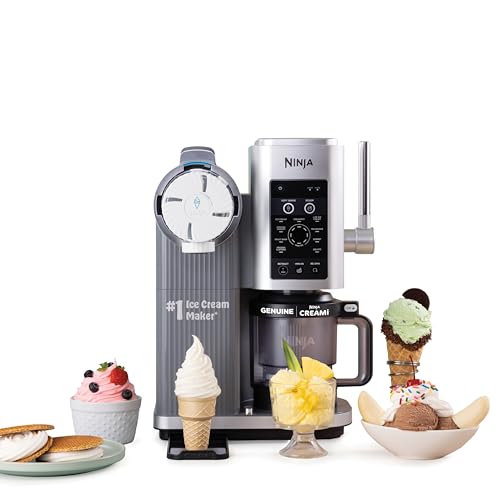
Ninja CREAMi Scoop and Swirl 13-in-1
The top of the line: it dispenses soft serve as well as processing a hard pint, which is a genuinely different machine rather than a colour change.

Ninja CREAMi Pints and Lids, 2 Pack
Extra pints are what let you keep three bases frozen at once, which is the only way the 24 hour freeze stops being a bottleneck.

Ninja CREAMi XL Tubs and Lids, 2 Pack
XL tubs for the XL machines. They are not interchangeable with the standard pints in either direction.

Etekcity 0.1 Gram Food Scale with Bowl
Tenth gram resolution matters the moment you weigh salt as a percentage: 2 percent of 800 grams is 16 grams, and 1 gram resolution is an 6 percent error.
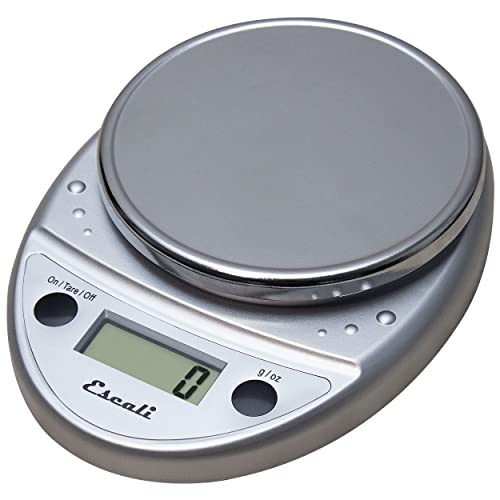
Escali Primo Digital Kitchen Scale
The default cheap kitchen scale. One gram resolution is fine for brines and useless for espresso.

Freshware 32 Ounce Deli Containers, 24 Sets
Where ice cream bases, brines and stock live between steps. Cheap enough that you stop rationing them.
Prices when last checked. They change often.
Frequently asked questions
Why did my base come out crumbly instead of icy or smooth?
Crumbly usually points to total solids sitting below about 32 percent, most often from a base too low in fat and sugar together, which leaves large ice crystals with nothing coating or softening them. This is a composition problem rather than a freezing problem, and the fix is not a longer freeze but a re-spin with a small amount of added liquid, covered in detail in the dedicated re-spin guide.
Can I use a recipe written for a churned ice cream maker without changing anything?
Usually not without some adjustment, since a churned recipe often assumes overrun will lighten the final texture, an effect a Creami barely produces. A churned recipe brought over unchanged can taste denser or icier than intended in a Creami, and total solids that worked fine with whipped-in air may need a slight increase to spin smoothly without it.
How long can a frozen base sit before I actually spin it?
A pint that stays fully and continuously frozen can typically wait weeks before spinning without a texture penalty, since the composition that determines the result was locked in before freezing. What matters is that it stays solid the entire time; a pint that partially thaws and refreezes at any point is a different situation, covered in the re-spin guide, and should be evaluated for food safety as well as texture.
Do I need the specific pints and tubs made for my model?
Yes. Standard 16 ounce pints fit the original and NC301 machines, while 24 ounce XL tubs fit the XL Deluxe models, and the two are not interchangeable in either direction because the blade depth and container geometry are calibrated to a specific size. Using the wrong container risks an incomplete spin or the blade never fully engaging the base.
Is it safe to use raw eggs in a custard style Creami base?
Not without cooking them first. Any custard base built with raw eggs should be brought to 160 F, the USDA published safe minimum internal temperature for egg dishes, before it goes into the pint, since freezing does not pasteurize eggs the way heat does. A base made this way should be cooled quickly after cooking and kept out of the 40 F to 140 F danger zone before it goes into the freezer.
What is the fastest way to check whether my planned base has enough total solids?
Weigh the fat and sugar contributions in grams against the total base weight using a kitchen scale, then run those percentages through the ice cream base calculator rather than guessing from a recipe card written for a different machine. A base with roughly 16 percent fat and 16 percent sugar, plus typical milk solids, lands comfortably in the 32 to 45 percent range that spins smooth on the first pass.
Sources
Published figures, quoted as published. We do not generate our own time and temperature data.
How we research: we compare manufacturer specifications, owner manuals, published USDA and FSIS figures and recurring themes in verified owner reviews. We do not cook test batches or run instruments, and nothing here is professional food safety advice. When a figure is not published by a source we trust, we say so rather than estimate one.