Vacuum bag size for a whole chicken breast
For a whole chicken breast, use a bag at least 7 inches wide by 12 inches long. An external sealer needs three inches of clear embossed film above the food, or the seal fails.
The sizing
| Dimension | Food | Minimum bag |
|---|---|---|
| Width | About 6 in | 7 in |
| Length | About 9 in | 12 in |
| Clear film above the food | Not applicable | 3 in |
| Machine type | Not applicable | External or chamber |
External and chamber bags are not interchangeable
An external sealer pulls air out through the open end of the bag, and it can only do that because the film is embossed with channels. A smooth bag in an external machine simply collapses against itself and never evacuates. A chamber machine evacuates the whole box around the bag, so it uses smooth film, which is both cheaper per bag and useless in an external sealer. Buying the wrong one is the most common first week mistake, and it looks like a broken machine.
Gear that fits these numbers
What this job needs

FoodSaver Vacuum Sealer with Automatic Bag Detection
The bag detection is the feature that earns its keep in daily use: you stop guessing at moist versus dry settings and stop wasting bags on a failed seal.
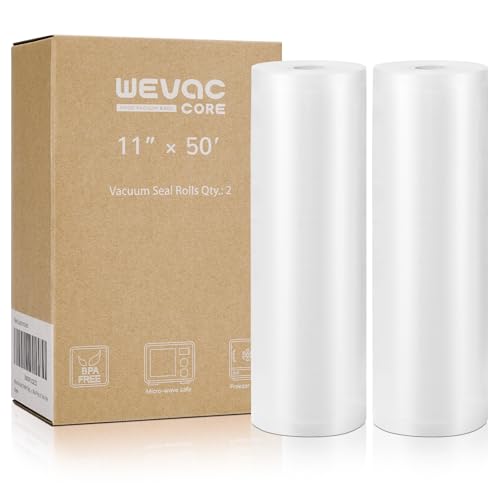
Wevac Vacuum Sealer Rolls, 11 by 50 Inch, 2 Rolls
Embossed channels are what let an external sealer pull air out at all. A smooth chamber bag in a suction machine simply never evacuates.

Wevac Pre-Cut Vacuum Sealer Bags, Quart, 200 Count
Pre-cut quart bags are the right default for single portions: cutting from a roll costs you a seal at each end and about four inches of film.
Prices when last checked. They change often.
Frequently asked questions
What size vacuum bag do I need for a whole chicken breast?
At least 7 inches wide by 12 inches long. An external sealer needs three inches of clear embossed film above the food because the bag is pulled through a channel, while a chamber machine only needs about two inches since it evacuates the whole box instead.
Can an external sealer handle this?
Yes. This is a dry seal well inside what an external sealer does. Keep the sealing area clean and dry, and if the food is wet, fold a paper towel inside the bag below the seal line to catch anything that travels.
Where do the numbers on this page come from?
Geometry and machine capability. No food safety claims are made here. Nothing here comes from cooking test batches in our own kitchen, and we do not claim otherwise. Where the USDA or FSIS publishes a figure we quote it and link the source. Where we have no defensible figure we say so rather than estimate one.
Sources
Published figures, quoted as published. We do not generate our own time and temperature data.
How we research: we compare manufacturer specifications, owner manuals, published USDA and FSIS figures and recurring themes in verified owner reviews. We do not cook test batches or run instruments, and nothing here is professional food safety advice. When a figure is not published by a source we trust, we say so rather than estimate one.