VEVOR
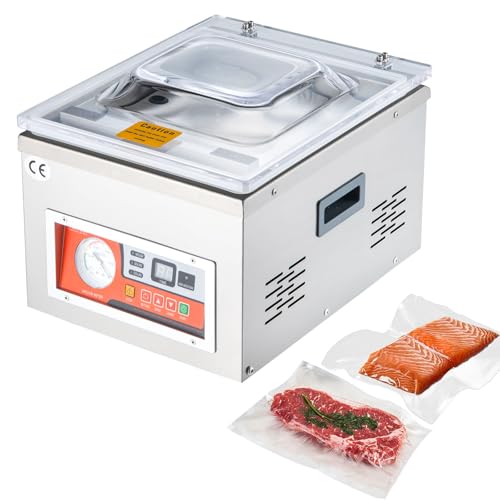
VEVOR Chamber Vacuum Sealer, 10.2 Inch
The cheapest genuine chamber machine worth owning, and the entry point at which sealing liquids stops being a fight.
At 95 percent vacuum, water boils at about 90 F, so any liquid warmer than that will bubble violently in a chamber sealer and flood the chamber. Chill stock and soup to refrigerator temperature before sealing, or stop the cycle at a lower vacuum level.
The formula
Antoine equation for water: log10(P mmHg) = 8.07131 - 1730.63 / (233.426 + T C) P at vacuum% = 760 x (1 - vacuum% / 100) Solve for T to get the boiling point at that pressure.
This is straightforward physics, not a rule of thumb. Boiling happens when the vapour pressure of the liquid equals the pressure above it, and a chamber sealer lowers that pressure dramatically. The bubbles you see are not air escaping the liquid, they are the liquid boiling at room temperature.
Gear that fits these numbers
Only a chamber machine evacuates the space around the bag rather than pulling through its opening, which is what makes sealing liquid possible at all.
The cheapest genuine chamber machine worth owning, and the entry point at which sealing liquids stops being a fight.
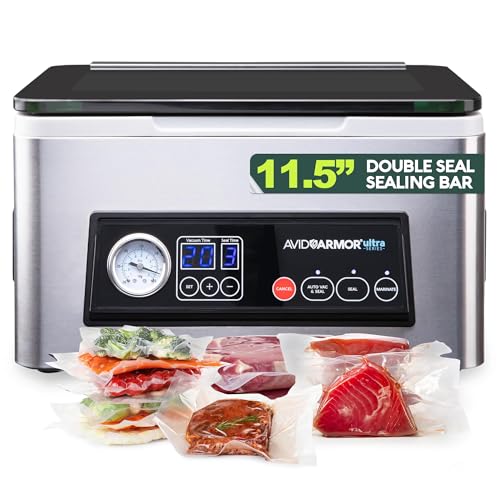
A chamber machine evacuates the whole box rather than sucking through the bag opening, which is the only way to seal soup, brine or a marinating steak without a mess.

Built specifically around liquids and sous vide bags rather than dry storage, which is the use case most chamber marketing ignores.

Chamber bags are smooth and cheaper per bag than embossed film, and they only work in a chamber machine. Mixing the two up is the most common first week mistake.

The longer seal bar is about bag width, not power: a 12.6 inch bar takes a full width bag that a 10 inch machine cannot close.

Double seal and a replaceable bar. Double sealing matters most on liquids, where a single weld is the thing that fails weeks later in the freezer.
Prices when last checked. They change often.
A liquid boils when its vapour pressure matches the pressure of the atmosphere above it. At sea level that happens at 212 F. Take away 95 percent of the atmosphere and it happens at around 90 F, which is below room temperature on a warm day. The bubbles rising out of your stock are not trapped air. The stock is boiling.
This matters because a boiling liquid foams, and foam reaches the seal bar. A weld contaminated with stock looks fine and fails in the freezer, and liquid that goes past the bar ends up in the pump, where it is a maintenance problem rather than an inconvenience.
Chill the liquid, which is the reliable answer: refrigerator temperature is comfortably below the boiling point at any vacuum a home machine reaches. Or stop the cycle manually before full vacuum, which most chamber machines allow, accepting a weaker vacuum in exchange for a calm bag. Both beat the third option, which is cleaning stock out of a pump.
It is boiling. Removing most of the air above a liquid lowers its boiling point dramatically, and at 95 percent vacuum water boils at around 90 F. Anything warmer than that will bubble, foam and reach the seal bar. Chilling the liquid to refrigerator temperature puts it well below the boiling point at any vacuum a home machine produces.
Refrigerator temperature, around 38 F, is comfortably safe at any vacuum level these machines reach. As a working rule, stay at least five degrees below the boiling point this calculator reports for your cycle. Warm stock straight off the stove is the single most common cause of a flooded chamber.
Not directly. An external sealer pulls air through the bag opening, so any liquid near that opening travels toward the pump with it. The workaround is to freeze the liquid into a solid block first and seal it frozen, which works well for stock and sauces and is how most people manage without a chamber machine.
No, the seal itself is a heat weld and is unaffected by how much vacuum preceded it. What you lose is vacuum quality, meaning a little more residual air in the bag, which slightly reduces storage life and makes the package less rigid. For a liquid you are freezing within days, that trade is usually worth making.
Close enough for this purpose. Dissolved solids raise the boiling point slightly, an effect called boiling point elevation, but at the concentrations in stock or soup the shift is well under a degree. Fats and alcohols behave differently, and an alcohol-containing liquid will boil sooner rather than later than this calculator suggests.
How this calculator works: it applies the formula above to the numbers you enter. Where a figure is published by the USDA or FSIS we quote it and name the source. Where a figure is derived from a physical model we say so and state the assumptions. Where we have no defensible figure the calculator returns nothing and tells you why, rather than guessing. This is researched general information, not professional food safety advice.