Best chamber vacuum sealer
The best chamber vacuum sealer for most home kitchens is the Avid Armor USV20 at $319, which seals liquids and marinated food without the mess an external sealer makes. The cheapest genuine chamber machine worth buying is the VEVOR 10.2 Inch Chamber Vacuum Sealer at $219.90.
A chamber machine solves one problem an external sealer cannot: it evacuates the whole sealed box rather than sucking air out through the bag opening, so liquid never gets anywhere near the pump. For most kitchens that want to seal soup, brine, or a marinating steak without a mess, Avid Armor USV20 at $319 is the buy. An 11.5 inch seal bar fits full width bags, and it is the model most often cited in verified owner reviews as the entry point where sealing liquids simply stops being a fight.
The three tiers
Every roundup here is built as three genuinely different answers rather than one flat ranking, because that is how people actually shop: a first purchase, a considered upgrade, and a ceiling. The expert pick is not the best pick for most readers, and the section below says who should skip it.
Cheapest real chamber machine
At $219.90 this is the least expensive genuine chamber sealer worth owning, and the entry point at which sealing liquids stops being a fight rather than an upgrade you have to justify.
Skip it if: Skip it if you plan to seal wide format bags regularly. The 10.2 inch seal bar is shorter than the 11.5 and 12.6 inch bars on the machines above it.
VEVOR Chamber Vacuum Sealer, 12.6 Inch
A 12.6 inch seal bar is about bag width rather than raw sealing power: it closes a full width bag that a 10 inch chamber machine cannot, which matters the first time you try to seal a whole pork shoulder.
Skip it if: Skip it if counter space is tight. The longer seal bar comes with a larger footprint that a 10.2 inch machine does not need.
Gasbye Chamber Vacuum Sealer, 5.3 Quart
A double seal and a replaceable seal bar are built specifically for liquids: a single weld is the seam that fails weeks later in the freezer, and double sealing is the cheap insurance against that.
Skip it if: Skip it if you only seal dry goods occasionally. A double seal cycle takes longer than a single one, and that extra time is wasted on a bag of rice.
Gear that fits these numbers
The three picks side by side
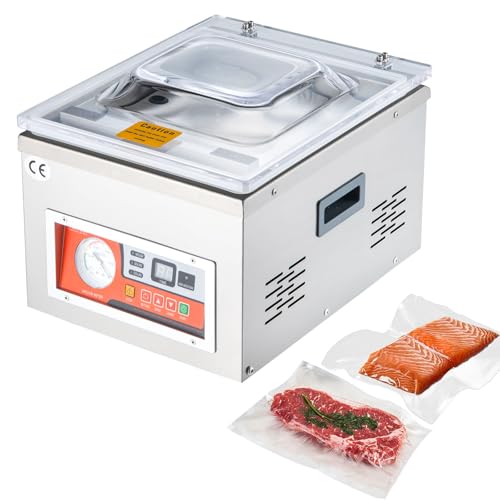
VEVOR Chamber Vacuum Sealer, 10.2 Inch
The cheapest genuine chamber machine worth owning, and the entry point at which sealing liquids stops being a fight.

VEVOR Chamber Vacuum Sealer, 12.6 Inch
The longer seal bar is about bag width, not power: a 12.6 inch bar takes a full width bag that a 10 inch machine cannot close.

Gasbye Chamber Vacuum Sealer, 5.3 Quart
Double seal and a replaceable bar. Double sealing matters most on liquids, where a single weld is the thing that fails weeks later in the freezer.
Prices when last checked. They change often.
What actually makes a chamber sealer different from a FoodSaver?
An external sealer like a FoodSaver pulls air out through the open end of the bag while the seal bar closes behind it, which is why liquid gets sucked into the pump the moment the bag is more than half full of anything wet. A chamber machine puts the entire bag, food, liquid and all, inside a sealed box and pulls the vacuum on the whole chamber at once. Nothing moves through a channel, so there is nothing for liquid to be pulled into. That single mechanical difference is the entire reason a chamber machine costs more and does more.
There is a side effect worth knowing before the first use: pulling a strong vacuum drops the boiling point of any liquid in the bag. A warm stock or a marinade can visibly bubble inside the chamber even though it is nowhere near its normal boiling point, simply because the pressure around it has dropped. Chilling liquids before sealing them avoids the mess entirely.
How much seal bar length do you actually need?
Seal bar length decides the widest bag the machine can close, not how strong the vacuum is.
| Model | Price | Seal bar | Notable feature |
|---|---|---|---|
| VEVOR 10.2 Inch Chamber Vacuum Sealer | $219.90 | 10.2 in | Cheapest genuine chamber machine |
| Avid Armor USV20 | $319 | 11.5 in | Handles liquids as a matter of course |
| Vesta Precision 12 Inch | $319 | 12 in | Settable vacuum time for delicate items |
| Avid Armor USV20 Ultra | $335.27 | 11.5 in, removable | Bar removes for cleaning |
| VEVOR 12.6 Inch Chamber Vacuum Sealer | $309.90 | 12.6 in | Widest bar on this list |
| Beelicious Pro DualCore CVS101 | $329.99 | Fits a 6 L chamber | Dual vacuum zones for liquids |
| Gasbye Chamber Vacuum Sealer | $369.99 | 11.5 in, replaceable | Double seal |
Can a chamber sealer really handle soup and marinade without a mess?
Yes, and it is the reason to own one. VEVOR 10.2 in chamber and Beelicious CVS101 are both built with liquids in mind rather than as an afterthought: the Beelicious specifically markets its dual vacuum zones around liquid and sous vide bags rather than dry pantry storage, which is the use case most chamber sealer marketing quietly ignores. A single seal weld across a bag of soup is the weak point that fails in the freezer weeks later, which is what Gasbye chamber's double seal is built to avoid.
What about long term maintenance?
A chamber machine that regularly seals liquid will eventually need its seal bar cleaned or replaced, since residue from a marinade or stock builds up on it over time. Avid Armor USV20 Ultra answers that directly with a removable seal bar, which most chamber machines, including the base Avid Armor USV20, are not designed to take out. If liquids are most of what you seal, budget for that maintenance step rather than discovering it the first time the bar needs attention.
Does a chamber sealer pay for itself over an external one?
The price gap between a genuine chamber machine and a good external sealer is real: VEVOR 10.2 in chamber at $219.90 costs roughly double FoodSaver auto, and Gasbye chamber at $369.99 costs more than most external sealers by a wide margin. Where a chamber machine earns that back is in what it stops wasting: no failed seals on a marinated cut, no liquid pulled into a pump and ruining the machine, and no need to freeze a liquid solid first just to seal it. Anyone who cooks in batches, seals stock or brine regularly, or runs a sous vide setup often enough that a failed bag is a recurring annoyance rather than a rare one, tends to recover that price difference in saved bags and saved frustration within the first year.
Is vacuum sealing food actually safe to store?
Removing air slows spoilage and prevents freezer burn, but a vacuum bag is also an anaerobic environment, meaning no oxygen reaches the food inside, and that is exactly the condition Clostridium botulinum needs to grow. Vacuum sealing is not a substitute for refrigeration or a hot enough cooking temperature: it changes how long food keeps in the freezer or refrigerator, not whether it is safe to leave at room temperature. Cool hot liquids before sealing them, refrigerate or freeze sealed food promptly, and treat a vacuum seal as a storage tool rather than a safety step on its own. This matters more with a chamber machine than an external one, precisely because a chamber machine makes it easy to seal a large batch of warm stock or a big cut of raw meat in one session, and that batch still needs to go into the refrigerator or freezer promptly rather than sitting out while the rest of the session finishes.
How we chose
Every seal bar length, price and feature above was researched from manufacturer specifications and the verified marketplace listings behind each product. We did not seal a bag of soup in either machine ourselves. Where a maintenance point or a failure mode is mentioned, it reflects a recurring theme in verified owner reviews rather than something observed firsthand.
Gear that fits these numbers
Everything mentioned on this page
VEVOR Chamber Vacuum Sealer, 10.2 Inch
The cheapest genuine chamber machine worth owning, and the entry point at which sealing liquids stops being a fight.
VEVOR Chamber Vacuum Sealer, 12.6 Inch
The longer seal bar is about bag width, not power: a 12.6 inch bar takes a full width bag that a 10 inch machine cannot close.
Gasbye Chamber Vacuum Sealer, 5.3 Quart
Double seal and a replaceable bar. Double sealing matters most on liquids, where a single weld is the thing that fails weeks later in the freezer.

Avid Armor USV20 Ultra Chamber Vacuum Sealer
The removable seal bar is the maintenance difference: a chamber machine that seals liquids will eventually need that bar cleaned, and on most units it is not designed to come out.

Beelicious Pro DualCore CVS101 Chamber Vacuum Sealer
Built specifically around liquids and sous vide bags rather than dry storage, which is the use case most chamber marketing ignores.
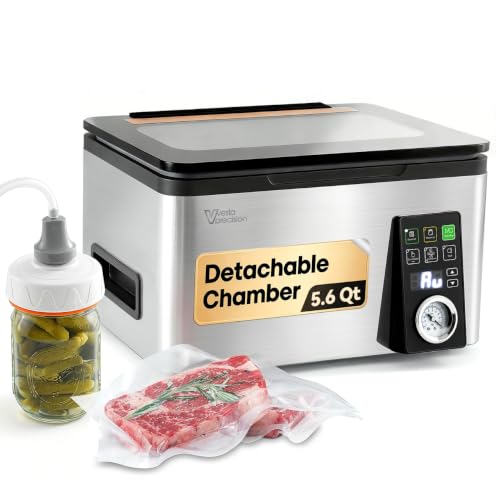
Vesta Precision 12 Inch Chamber Vacuum Sealer
Settable vacuum time rather than a fixed cycle, which is what you want when a delicate item needs a shorter pull than a steak.

Avid Armor Chamber Vacuum Sealer Pouches, 3.5 mil
Chamber bags are smooth and cheaper per bag than embossed film, and they only work in a chamber machine. Mixing the two up is the most common first week mistake.
Prices when last checked. They change often.
Frequently asked questions
What is the best chamber vacuum sealer overall?
The Avid Armor USV20 at $319 is the best overall pick. Its 11.5 inch seal bar fits full width bags and the chamber design seals liquid, soup and marinade without pulling anything into a pump, which is the single most common reason people upgrade from an external sealer in the first place.
What is the cheapest chamber vacuum sealer actually worth buying?
The VEVOR 10.2 Inch Chamber Vacuum Sealer at $219.90 is the least expensive genuine chamber machine that performs like one. It has a shorter seal bar than the larger models, which limits bag width, but it removes the mess a suction sealer makes with liquid at a price close to a premium external sealer.
Do I actually need a chamber sealer instead of a FoodSaver?
Only if you regularly seal liquid, marinated food or a large batch of bags back to back. A chamber machine evacuates the whole sealed bag from outside rather than sucking air through the bag opening, so soup and marinade never reach a pump. If you mostly seal dry cuts of meat or leftovers, a suction sealer does the job for less money.
Why does soup bubble inside a chamber vacuum sealer?
Pulling a strong vacuum lowers the pressure inside the chamber, and liquid boils at a lower temperature under lower pressure. A warm stock can visibly bubble even though it is far below its normal boiling point, simply because the surrounding pressure has dropped. Chilling liquids before sealing avoids the bubbling and the mess it can leave in the chamber.
Do chamber vacuum sealer bags cost more than regular vacuum bags?
Chamber bags are actually cheaper per bag than the embossed film used in external sealers, because they are smooth rather than channeled. The tradeoff is compatibility: smooth chamber bags only work in a chamber machine, since an external sealer needs the embossed channels to pull air out through the opening at all.
Is vacuum sealing enough to make food safe to store at room temperature?
No. Removing air slows spoilage and prevents freezer burn, but a vacuum bag is an anaerobic environment where Clostridium botulinum can grow if food is left too long at an unsafe temperature. Refrigerate or freeze sealed food promptly, and treat vacuum sealing as a storage improvement rather than a substitute for cold storage.
Sources
Published figures, quoted as published. We do not generate our own time and temperature data.
How we research: we compare manufacturer specifications, owner manuals, published USDA and FSIS figures and recurring themes in verified owner reviews. We do not cook test batches or run instruments, and nothing here is professional food safety advice. When a figure is not published by a source we trust, we say so rather than estimate one.