
BOMATA
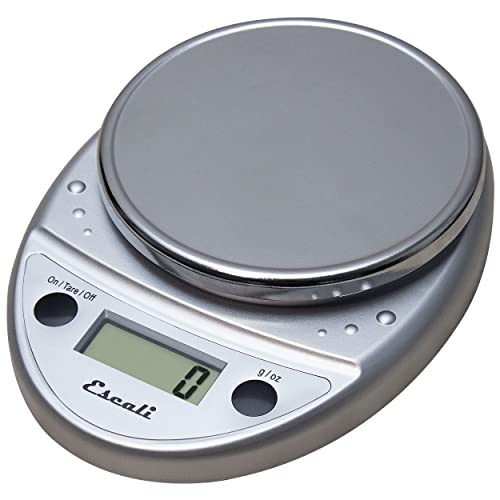
BOMATA Large Kitchen Scale, 0.1 Gram
Tenth gram resolution across a full 11 pound range, which most precision scales give up.
Ingredient quantities scale linearly with servings, so doubling from 4 to 8 multiplies every quantity by 2. Cooking time does not scale: it follows thickness and the appliance, so a doubled sous vide batch takes exactly as long unless the pieces got thicker.
The formula
factor = target servings / original servings new quantity = original quantity x factor What does NOT scale: cooking time follows thickness and appliance oven temperature unchanged salt in a brine already a percentage pan size scales by area, not by length
The most expensive scaling mistake is assuming time scales with quantity. Doubling a pressure cooker recipe does not double the time at pressure, though it does lengthen the come-up. Doubling a sous vide bag changes nothing at all unless the pieces are thicker.
Gear that fits these numbers
Scaled volume measures compound their own error. A 1.5 times cup measurement is an estimate of an estimate, where a scale just multiplies a number.
Tenth gram resolution across a full 11 pound range, which most precision scales give up.

The pull out display is the feature: a wide bowl stops hiding the number you are trying to read.

A cheap commercial tub that doubles as a sous vide bath if you cut or buy a lid for it.

Where ice cream bases, brines and stock live between steps. Cheap enough that you stop rationing them.
The default cheap kitchen scale. One gram resolution is fine for brines and useless for espresso.

Tenth gram resolution matters the moment you weigh salt as a percentage: 2 percent of 800 grams is 16 grams, and 1 gram resolution is an 6 percent error.
Prices when last checked. They change often.
Ingredients scale. Salt in a brine is already a percentage, so it scales automatically when the water does. Seasoning to taste scales sub-linearly in practice, and most cooks find that doubling a recipe wants somewhat less than double the chilli and the strong aromatics.
Time is the one that catches people. Cooking time is set by the thickness of the thing being cooked and by how fast the appliance delivers heat, not by how many of them there are. Two steaks in a bath take exactly as long as one. A doubled braise in a pressure cooker holds at pressure for the same number of minutes, though it takes longer to get there and longer to release.
A recipe that doubles needs twice the surface area, not twice the diameter. A 9 inch round pan has about 64 square inches of base; doubling that needs roughly 12.7 inches, not 18. Getting this wrong is why a doubled cake batter overflows a pan that looked generous.
No. Cooking time is governed by the thickness of what is being cooked and by how quickly the appliance delivers heat, not by the total quantity. Two steaks of the same thickness in a water bath take exactly as long as one. What does grow is any phase where the appliance has to heat a larger mass, such as coming up to pressure.
If the recipe expresses salt as a percentage, as brines and ferments do, it scales automatically when the other weights do. If it gives a fixed amount, scale it linearly but taste before committing, since perceived saltiness does not track quantity as neatly as the arithmetic suggests, particularly in dishes that reduce.
One with twice the base area, which is not twice the diameter. A 9 inch round pan has roughly 64 square inches; doubling that needs about 12.7 inches across, not 18. For rectangular pans, multiply both dimensions by about 1.41. Using a pan that is too small is the usual cause of a doubled batter overflowing.
Freely, as long as the pieces stay the same thickness and the bath can circulate around all of them. Adding more bags does not change the time. What does matter is water volume and spacing: a crowded bath has cold spots, and a rack that keeps the bags separated is the fix rather than a longer cook.
Surface area to volume changes. A smaller batch in the same pan has proportionally more surface exposed, so it reduces faster and browns more, which concentrates flavour and can push seasoning past where you wanted it. Use a smaller pan when halving, and check for doneness earlier than the original time suggests.
How this calculator works: it applies the formula above to the numbers you enter. Where a figure is published by the USDA or FSIS we quote it and name the source. Where a figure is derived from a physical model we say so and state the assumptions. Where we have no defensible figure the calculator returns nothing and tells you why, rather than guessing. This is researched general information, not professional food safety advice.