Anova Precision Cooker 3.0 vs Breville Joule Turbo
The Anova Precision Cooker 3.0 ($169.00) has a display and WiFi and app control, while the Breville Joule Turbo ($237.07) is app-only with no on-device screen; both run at 1100 watts and heat a full 12 quart bath at the same speed.
Anova 3.0 at $169.00 and Joule Turbo at $237.07 are both full-power, 1100 watt circulators capable of running a 12 quart bath, so the choice comes down to interface and footprint rather than raw cooking capability. Anova gives you a physical display and controls on the unit itself, plus the option of walking up and adjusting it by hand. Joule Turbo drops the display entirely: the phone app is the only way to set, monitor or change anything, in exchange for a noticeably smaller body that tucks into a drawer.
How do they actually compare, side by side?
Strip away the branding and the two machines are closer than their price difference suggests. Both heat 1100 watts of water, both connect over WiFi, and both are rated for a full-size home bath. Neither one is faster to bring a bath up to temperature than the other on paper, since matched wattage means matched heating speed regardless of brand. The real split is in how you interact with them day to day, and in what you are paying extra for at the register.
| Spec | Anova Precision Cooker 3.0 | Breville Joule Turbo |
|---|---|---|
| Price | $169.00 | $237.07 |
| Power | 1100 W | 1100 W |
| Control | WiFi and app, plus on-device display | App only, no display |
| Build | Stainless | Compact, smallest full-power unit |
What happens when the app is not available?
This is where the two machines genuinely diverge. Anova 3.0 lists WiFi and app control alongside its own on-device display, so it can be started, adjusted or checked on entirely by hand if a phone is dead, out of range or simply not with you. Joule Turbo is app only with no physical display, so the phone is not a convenience layer on top of manual controls, it is the only interface the unit has. A dead phone battery, an uninstalled app on a borrowed phone, or a kitchen where more than one person wants to check the temperature without unlocking someone's phone are all situations where that gap shows up in practice.
Is either one better as a gift?
An app-only circulator asks more of whoever receives it: before Joule Turbo does anything, someone has to find the app, create an account, and pair the unit over the phone's own connection, all before the first cook. Anova 3.0 has that same setup available for full functionality, but its on-device display and buttons mean a less phone-comfortable relative can still run a basic cook using the unit alone. If you are buying a circulator as a gift for someone who is not already deep into smart kitchen gadgets, that lower setup floor makes the Anova the safer pick.
Does the smaller size actually matter?
Joule Turbo is built to be the smallest full-power circulator on the market, which shows up as a real advantage in a kitchen with limited drawer or cabinet space. Anova 3.0 is not large, but it is a taller, more traditional clamp-style unit. If storage space is the binding constraint in your kitchen rather than price, the Joule Turbo's size is the strongest argument in its favor, even at close to seventy dollars more than the Anova.
What else do you need alongside either circulator?
Neither machine ships with a container or a lid, and a clamp-on circulator running in an open pot loses water to evaporation over a long cook, which is the same issue regardless of which brand you buy. A lidded container like EVERIE 12 qt container solves that for either one. A good instant-read thermometer like Thermapen ONE is also worth owning alongside a circulator: it is how you confirm a bath actually reached and held its set temperature rather than trusting the display alone, and it is essential for checking doneness after the bag comes out for a sear.
Which one should you buy?
If you are choosing between these two for a first circulator, Anova 3.0 is the better default: it costs about seventy dollars less, gives you a physical display you can read at a glance, and lets you set a temperature by hand if your phone is dead or out of WiFi range. Buy Joule Turbo instead if kitchen storage space is genuinely tight and you are already comfortable running appliances entirely from an app; its smaller body is the one advantage it has over the Anova, and for some kitchens that advantage is worth the extra cost. Neither is the wrong choice for someone who already owns one and is happy with it: the two machines heat water at the same rate and hold temperature just as precisely, so switching from one to the other buys you a different interface, not better food.
Gear that fits these numbers
Everything mentioned on this page

Anova Precision Cooker 3.0
The default full size circulator: enough wattage to bring a 12 quart bath up quickly and hold it, with app control for long overnight cooks.
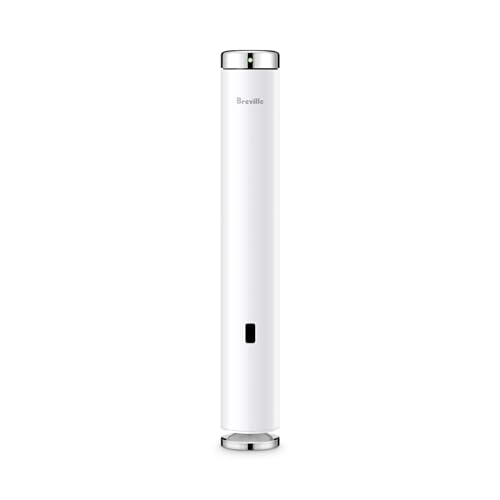
Breville Joule Turbo Sous Vide
Small enough to live in a drawer and strong enough for a full bath, with the tradeoff that there is no display on the device: the phone is the interface.

EVERIE 12 Quart Sous Vide Container with Hinged Lid
A lid cut for a circulator is the single upgrade that makes long cooks practical: it stops evaporation, which is what drops the water line and trips a low water alarm at hour nine.

ThermoWorks Thermapen ONE
One second and half a degree. On a page about pasteurization that accuracy is not a luxury, it is the difference between a figure meaning something and not.
Prices when last checked. They change often.
Frequently asked questions
Is the Anova Precision Cooker 3.0 as powerful as the Joule Turbo?
Yes. Both circulators run at 1100 watts and are rated for a full-size home bath, generally up to around 12 quarts. The two machines heat and hold temperature at essentially the same speed and capacity; the differences between them are in the control interface and the physical size of the unit, not in raw heating power.
Can you use the Joule Turbo without the app?
No. The Joule Turbo has no display or physical controls on the unit itself, so the companion app is required to start a cook, set a temperature or check progress. This is different from the Anova Precision Cooker 3.0, which can be operated entirely from its own display and buttons without a phone at all.
Which one is better for a first-time sous vide cook?
The Anova Precision Cooker 3.0 is generally the easier starting point: it costs less, has a physical display you can read and adjust without a phone, and gives a new cook a way to double-check settings at a glance. The Joule Turbo is a fine choice for a first-timer who is already comfortable running everything from an app.
Does the Joule Turbo fit in a standard sous vide container?
Yes, a standard 12 quart sous vide container built for a clamp-style circulator fits both the Anova Precision Cooker 3.0 and the Joule Turbo, since both clamp to the side of a container in the same general way. Check the specific container's lid cutout against the circulator's body width before buying if the fit needs to be exact.
Why does the Joule Turbo cost more than the Anova 3.0?
Pricing between the two shifts over time and by retailer, but the Joule Turbo has generally carried a premium tied to its smaller physical footprint and the Breville brand. It does not reflect a difference in heating power, since both units run at the same 1100 watts and handle the same bath size.
Do you need a container and a thermometer in addition to either circulator?
Yes. Neither the Anova Precision Cooker 3.0 nor the Joule Turbo includes a bath container or a lid, and running either one in an open pot loses water to evaporation over a long cook. A dedicated container with a fitted lid and a reliable instant-read thermometer to confirm the bath actually reached its set temperature are the two accessories worth buying alongside whichever circulator you choose.
Sources
Published figures, quoted as published. We do not generate our own time and temperature data.
How we research: we compare manufacturer specifications, owner manuals, published USDA and FSIS figures and recurring themes in verified owner reviews. We do not cook test batches or run instruments, and nothing here is professional food safety advice. When a figure is not published by a source we trust, we say so rather than estimate one.