Ninja AutoBarista Pro vs a semi automatic espresso setup: which to buy
The Ninja AutoBarista Pro costs $949.99 and grinds, doses, tamps, brews and steams milk for 13 one touch drinks with no user input at all. The Gaggia Classic Evo Pro costs $499.00, does none of those steps automatically, and needs a separate grinder such as the Baratza Encore ESP at $199.95 before it can pull a shot.
Buy the Ninja AutoBarista Pro at $949.99 if you want the same drink, made the same way, at the touch of one button, with no grinding, dosing, tamping or milk steaming left for you to do. Buy a semi automatic setup built around the Gaggia Classic Evo Pro at $499.00 plus a real grinder such as the Baratza Encore ESP at $199.95 if you want to control the dose, the grind and the ratio yourself, and are willing to spend a few minutes per shot learning to do it well. These are not two points on the same scale of convenience. A fully automatic machine exists specifically to remove the decisions a semi automatic machine exists to hand you.
What does fully automatic actually mean here, step by step?
On the Ninja AutoBarista Pro, pressing one of its 13 drink buttons triggers the entire chain: the machine grinds a dose of whole beans, doses it into an internal chamber, tamps it, brews espresso through it, and for milk drinks, steams and pours milk automatically. Nothing about that chain asks you to weigh, adjust or press anything. The Gaggia Classic Evo Pro does none of it. It has no grinder, no doser, no tamper and no automatic milk system: you grind beans in a separate grinder, weigh the dose onto a scale, tamp the puck by hand, start the shot by hand, and steam milk by hand with the wand.
- Fully automatic: grind, dose, tamp, brew and steam all happen inside one machine with no user input
- Semi automatic: every one of those steps is a separate manual action, using separate tools
- There is no middle setting on either machine that turns automation up or down; each is built around its own philosophy
| Ninja AutoBarista Pro | Gaggia Classic Evo Pro setup | |
|---|---|---|
| Price | $949.99 | $499.00 plus a grinder |
| Grinding | Automatic, built in | Manual, separate grinder required |
| Dosing and tamping | Automatic | Manual, weighed and tamped by hand |
| Milk steaming | Automatic | Manual steam wand |
| Recipe control | 13 preset one touch drinks | Fully adjustable ratio and grind |
| Total setup cost | $949.99, nothing else to buy | About $699.00 with the Baratza Encore ESP |
Why are these called opposite philosophies rather than two points on a scale?
Because a semi automatic machine is not simply a fully automatic machine with some steps removed. Every manual step on the Gaggia Classic Evo Pro, the grind setting, the dose weight, the tamp pressure and the extraction time, exists as a variable specifically so the person pulling the shot can change it. A 1:2 ratio brewing an 18 gram dose into 36 grams of liquid espresso in 25 to 32 seconds is a target you adjust toward by changing those variables one at a time. The AutoBarista Pro exists to remove that adjustment entirely: its 13 drinks are fixed recipes tuned at the factory, and the whole point of the machine is that you never touch a single one of the variables a semi automatic machine hands you.
What do you actually give up by choosing full automation?
Control over every variable that determines whether a specific bag of beans tastes its best. The AutoBarista Pro's 13 drinks are fixed, so a lighter roast that wants a longer, slower extraction is brewed the same way as a dark roast that wants a shorter one. There is no bottomless portafilter to watch for channeling, no scale reading to chase a 1:2 ratio, and no way to nudge the grind by a hair when a new bag of beans behaves differently than the last one. A semi automatic setup hands you all of that control, at the cost of needing to actually exercise it every time you want a shot.
What does the semi automatic route actually cost once everything is added up?
Budget $499.00 for the Gaggia Classic Evo Pro itself, plus $199.95 for the Baratza Encore ESP, the least expensive grinder that genuinely holds an espresso range, for a total of roughly $699.00. A scale is not optional: espresso is measured by weight in and weight out, not volume, because crema volume varies with the bean and tells you nothing useful. The Timemore Basic 2.0 at $55.00 adds a 0.1 gram scale with a built in timer, bringing a complete semi automatic setup to about $754.00, still less than the AutoBarista Pro's $949.99 and with more room to grow into better beans and technique over time.
So which one should you actually buy?
If you want the same drink made the same way every time with zero technique required, buy the Ninja AutoBarista Pro at $949.99, or the base Ninja AutoBarista at $899.99 if 10 drink presets instead of 13 does not matter to you; both share the same grinder and brew unit. If you want to control the ratio, the grind and the extraction time yourself, and you are willing to weigh a dose and pull a shot by hand, build a semi automatic setup around the Gaggia Classic Evo Pro and the Baratza Encore ESP. Do not buy the AutoBarista expecting to tinker with it, and do not buy the Gaggia expecting it to do anything for you automatically. That mismatch, not the price, is what causes buyer's remorse in this category.
Gear that fits these numbers
Everything mentioned on this page
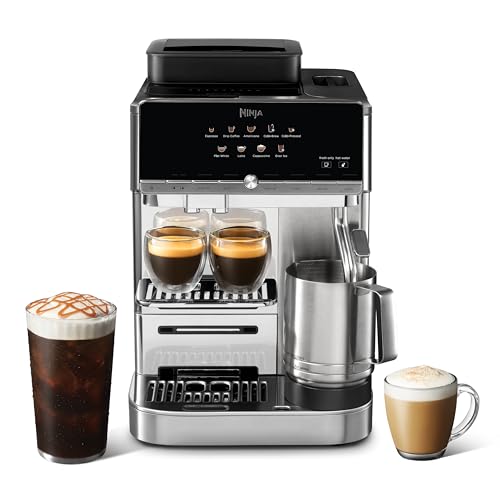
Ninja AutoBarista Fully Automatic Espresso
The AutoBarista with three fewer drink presets. Same grinder and brew unit, so the gap is narrower than the price gap suggests.

Gaggia Classic Evo Pro Espresso Machine
A commercial 58 mm portafilter in a home machine, endlessly modifiable, and completely dependent on you owning a real grinder.

Baratza Encore ESP Coffee Grinder
The cheapest grinder that genuinely holds an espresso grind range. Below this, a good machine is fed by a grinder that cannot dial in.

Timemore Coffee Scale Basic 2.0
Brew ratio is a weight ratio, so a 0.1 gram scale with a timer is the cheapest real upgrade to your espresso.
Prices when last checked. They change often.
Frequently asked questions
What is the difference between the Ninja AutoBarista and the AutoBarista Pro?
The AutoBarista Pro offers 13 one touch drink presets against 10 on the standard AutoBarista, and costs about $50.00 more. Both machines share the same internal grinder and brew unit, so the shot quality itself is not meaningfully different between them. The choice comes down to whether the extra three drink presets on the Pro are worth the price gap for your household.
Can I adjust the grind size or dose on a fully automatic machine like the AutoBarista Pro?
Some fully automatic machines allow limited grind or strength adjustment through an app or a dial, but the adjustment range is narrow compared with a standalone grinder, and it is nowhere near the fine control a separate espresso grinder offers. If adjusting grind and dose per bag of beans matters to you, a semi automatic setup with its own grinder will always offer more range than a built in automatic grinder tuned for consistency across many users.
Does the Gaggia Classic Evo Pro steam milk automatically?
No. The Classic Evo Pro has a manual steam wand that you position and control by hand, the same as most semi automatic machines at its price. Automatic milk texturing is a feature reserved for machines built around convenience, like the AutoBarista line, and it is one of the clearest dividing lines between the two philosophies described in this comparison.
Is a semi automatic machine actually cheaper once everything is added up?
In this comparison, yes. A Gaggia Classic Evo Pro with a Baratza Encore ESP grinder and a basic scale runs roughly $750.00 total, against $949.99 for the AutoBarista Pro. The gap narrows if you add a better grinder or additional accessories to the semi automatic side, but the entry cost for real espresso control stays lower than the fully automatic path.
Can I put a bottomless portafilter on the AutoBarista Pro to diagnose channeling?
No, a fully automatic machine like the AutoBarista Pro does not use a removable portafilter at all; the brewing happens inside a sealed internal chamber. A bottomless portafilter, which lets you watch for channeling in the puck, is a tool that only applies to machines with a traditional portafilter, such as the Gaggia Classic Evo Pro.
Which one is easier to clean day to day?
The AutoBarista Pro is easier for daily wipe downs since there is no portafilter to knock out or basket to scrub, though its internal brew group still needs a periodic automated cleaning cycle. The Gaggia Classic Evo Pro requires knocking out the puck, rinsing the portafilter and backflushing periodically, which takes a few extra minutes per session but exposes every part that touches coffee for inspection.
Sources
Published figures, quoted as published. We do not generate our own time and temperature data.
How we research: we compare manufacturer specifications, owner manuals, published USDA and FSIS figures and recurring themes in verified owner reviews. We do not cook test batches or run instruments, and nothing here is professional food safety advice. When a figure is not published by a source we trust, we say so rather than estimate one.