The best espresso machine for home use
The Breville Barista Pro ($834.00) is the best espresso machine for most home setups: a ThermoJet heater that reaches brewing temperature in about 3 seconds and a built-in conical burr grinder. The Ninja Luxe Cafe Premier ($599.00) is the easier all-in-one starting point if you have never ground or tamped coffee before.
The best espresso machine for most home setups is the Barista Pro at $834.00: a ThermoJet heater that reaches brewing temperature in about 3 seconds, a built-in conical burr grinder, and a manual steam wand worth learning to use well. If $1,000 is a hard ceiling, see our picks under that line; if it is not, the Barista Touch Impress adds a touchscreen and automatic milk texturing above it.
The three tiers
Every roundup here is built as three genuinely different answers rather than one flat ranking, because that is how people actually shop: a first purchase, a considered upgrade, and a ceiling. The expert pick is not the best pick for most readers, and the section below says who should skip it.
Ninja Luxe Cafe Premier 3-in-1 Espresso Machine
The Luxe Cafe Premier grinds, brews espresso, brews drip coffee and makes rapid cold brew from one $599.00 box, with no separate grinder to buy or learn.
Skip it if: Skip it if you specifically want a manual steam wand to practice on. This machine leans toward push-button convenience over hands-on technique.
Breville Barista Express Espresso Machine
The Barista Express is the machine that made home espresso normal: a built-in conical burr grinder, a manual tamp, and a real steam wand, for $685.00.
Skip it if: Skip it if you do not want to learn to tamp by hand and dial in a grind. An automatic machine will get you a drinkable shot faster.
Breville Barista Touch Impress
The Barista Touch Impress tops the line: a touchscreen interface, an assisted tamp lever, and automatic milk texturing, at $1,389.99.
Skip it if: Skip it if $1,389.99 is outside budget, or if what you actually want at this level is more manual control rather than more automation. Our picks under $1,000 cover most of the same performance for less.
Gear that fits these numbers
The three picks side by side
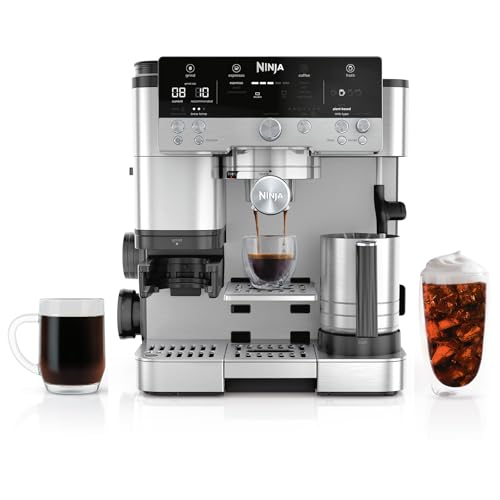
Ninja Luxe Cafe Premier 3-in-1 Espresso Machine
The cheaper Luxe Cafe, and the entry point to a machine that grinds and brews espresso and also makes a pot of coffee.

Breville Barista Express Espresso Machine
The machine that made home espresso normal. Built in grinder, manual tamp, and a steam wand you have to learn rather than a button.

Breville Barista Touch Impress
Assisted tamping plus automatic milk texturing. Expensive, and the honest question is whether you want to learn espresso or just drink it.
Prices when last checked. They change often.
Semi-automatic, fully automatic, or a bare portafilter: what these words mean
A semi-automatic machine like the Barista Express grinds and heats water for you, but you still tamp, load the portafilter, and start and stop the shot by hand. A fully automatic machine like the AutoBarista Pro does all of that with one button, at the cost of the control that lets an enthusiast fix a bad shot mid-pull. A machine like the Gaggia Classic Evo Pro sits at the other end entirely: a commercial 58 mm portafilter and no grinder at all, built to be modified rather than used exactly as it ships. Our automatic vs semi-automatic comparison covers which one actually fits a given routine.
Built-in grinder or a separate one: the case for both
A built-in grinder, like the one in the Barista Pro or the La Specialista Arte Evo, keeps the machine to one box and one purchase. A separate grinder, paired with a grinder-less machine like the Gaggia Classic Evo Pro, usually grinds more consistently at the fine end espresso needs, since a dedicated grinder like the Encore ESP is built around that one range instead of splitting the job with drip settings too. Our guide on why the grinder matters most makes the case that a mediocre grinder limits a great machine more than the reverse, and our grinder picks cover the standalone options.
Retention, the small amount of ground coffee left behind in the chute after each dose, is the detail a spec sheet never mentions but a recurring owner review always does. Built-in grinders tend to retain more per dose than a dedicated single-purpose grinder, which matters most to anyone who switches beans often rather than running through one bag at a time.
| Model | Price | Grinder | Type |
|---|---|---|---|
| Ninja Luxe Cafe Premier | $599.00 | Built in | Semi automatic, 3 functions |
| Breville Barista Express | $685.00 | Built in, conical burr | Semi automatic, manual tamp |
| Breville Barista Pro | $834.00 | Built in, conical burr | Semi automatic, ThermoJet heat |
| Breville Barista Touch Impress | $1,389.99 | Built in | Semi automatic, assisted tamp, auto milk |
Learning to steam milk vs letting the machine do it
The Barista Express and the Barista Pro both hand you a manual wand and expect you to learn to texture milk yourself, which takes a handful of failed attempts before it clicks. The Barista Touch Impress and the La Specialista Maestro both offer automatic milk texturing on top of a manual option, so you can lean on the automation early and switch to hand texturing once you want more control over microfoam thickness. Our milk texturing basics guide covers the technique either way.
How much upkeep these machines actually need
Every machine on this page needs regular descaling, and the interval matters more than the brand. Hard water shortens the life of the boiler in the Barista Express and the Barista Pro alike, and recurring owner reviews on both models point to descaling every 1 to 3 months, depending on local water hardness, as the maintenance step people skip until flow slows down. The Gaggia Classic Evo Pro, being fully manual and built around a commercial portafilter, is the easiest of the group to service yourself: replacement gaskets and shower screens are widely available because the machine has stayed close to the same design for years.
The AutoBarista Pro and other fully automatic machines add an internal grinder and brew group that need occasional cleaning cycles the machine prompts you to run. Skipping those prompts is the single most common cause of a fully automatic machine's shots getting noticeably worse after a year of daily use.
How we chose
Every machine here was researched from manufacturer specifications and the live Amazon Creators API catalog, with recurring owner review themes pulled in for reliability patterns like steam wand clogging and grinder consistency over time. No shot was pulled in person for this roundup: heat-up times and grind ranges reflect the manufacturers' own published figures. Fully automatic machines and grinder-less manual machines were kept in the same roundup rather than split out, since a shopper choosing between them is usually weighing the same tradeoff between convenience and control, not choosing from two unrelated categories.
Gear that fits these numbers
Everything mentioned on this page
Ninja Luxe Cafe Premier 3-in-1 Espresso Machine
The cheaper Luxe Cafe, and the entry point to a machine that grinds and brews espresso and also makes a pot of coffee.
Breville Barista Express Espresso Machine
The machine that made home espresso normal. Built in grinder, manual tamp, and a steam wand you have to learn rather than a button.
Breville Barista Touch Impress
Assisted tamping plus automatic milk texturing. Expensive, and the honest question is whether you want to learn espresso or just drink it.

Gaggia Classic Evo Pro Espresso Machine
A commercial 58 mm portafilter in a home machine, endlessly modifiable, and completely dependent on you owning a real grinder.

Ninja AutoBarista Pro Fully Automatic Espresso
A bean to cup machine: it grinds, doses, tamps, brews and steams without you touching anything, which is the opposite philosophy to a Gaggia.

Baratza Encore ESP Coffee Grinder
The cheapest grinder that genuinely holds an espresso grind range. Below this, a good machine is fed by a grinder that cannot dial in.

De'Longhi La Specialista Arte Evo
A built in grinder and a manual wand, which is the combination most people actually want at this price.

De'Longhi La Specialista Maestro
The top La Specialista, with both automatic milk and a manual wand so you can learn without being locked out of the easy path.
Prices when last checked. They change often.
Frequently asked questions
What is the real difference between the Breville Barista Express and the Barista Pro?
They share a similar conical burr grinder and a manual tamp, but the Barista Pro replaces the Express's thermocoil boiler with a ThermoJet heater that reaches brewing temperature in roughly 3 seconds instead of a couple of minutes. The Barista Express is otherwise the more established of the two and typically costs about $150 less, with a longer track record of owner repairs and replacement parts.
Is a fully automatic espresso machine like the Ninja AutoBarista Pro worth it over a semi-automatic?
It depends on what you want from the process. The AutoBarista Pro grinds, doses, tamps and brews without you touching anything, which is genuinely convenient on a weekday morning when nobody wants to think about tamp pressure. A semi-automatic like the Barista Express takes longer to learn but lets you fix a channeling shot or adjust a grind on the fly, which the fully automatic machine simply does not give you the option to do.
Do I need to buy a separate grinder for the Gaggia Classic Evo Pro?
Yes. The Gaggia Classic Evo Pro ships with no grinder at all, and pre-ground coffee will not hold the fine, consistent grind espresso needs. A dedicated espresso grinder like the Encore ESP is the minimum worth pairing with it; skipping that step is the single most common reason a first Gaggia shot tastes thin and sour.
What does the Barista Pro's ThermoJet heater actually change day to day?
It cuts the wait between turning the machine on and pulling a shot from a couple of minutes down to about 3 seconds, and it recovers just as fast between back to back shots. For a household making one drink a day the difference is fairly minor; for two or three drinks in a row each morning, it removes the wait almost entirely.
Is the Breville Barista Touch Impress worth $1,389.99 over the cheaper semi-automatics?
Only if the touchscreen interface and automatic milk texturing genuinely matter to you. The Barista Touch Impress does not pull a meaningfully better shot than the Barista Pro at less than half the price; the extra money buys convenience and a lever you no longer have to press down yourself, not stronger coffee.
What brew ratio should I start with when dialing in a new espresso machine?
A common starting point is 18 grams of ground coffee in, yielding 36 grams of espresso out, in roughly 25 to 30 seconds, sometimes written as a 1 to 2 ratio. Our espresso ratio calculator and dialing in guide both walk through adjusting grind size from that starting ratio rather than chasing time alone, since a shot that finishes on time but tastes sour usually needs a finer grind, not a longer pull.
Sources
Published figures, quoted as published. We do not generate our own time and temperature data.
How we research: we compare manufacturer specifications, owner manuals, published USDA and FSIS figures and recurring themes in verified owner reviews. We do not cook test batches or run instruments, and nothing here is professional food safety advice. When a figure is not published by a source we trust, we say so rather than estimate one.