Stand mixer buying guide: capacity, frame, and what general purpose actually means
Bowl-lift and tilt-head are a structural difference, not a style choice: a bowl-lift frame does not flex under heavy load the way a tilt-head does, which is what justifies the price and size step up at larger capacities like the 7 quart KitchenAid. For dedicated bread and pizza dough guidance see PizzaOvenCalc, and for cake batter, frosting, and meringue specifics see CakeDecoratingCalc.
This guide covers stand mixers the way most kitchens actually use them: whipped cream, mashed potatoes, general batters, meatloaf and burger mixes, shredded chicken, and the everyday jobs that do not push a machine to its limits. It does not cover bread and pizza dough, which belongs to PizzaOvenCalc, or cake batter, frosting, and meringue, which belongs to CakeDecoratingCalc, since both of those push toward different capacities and different frame requirements than general use does. What matters here is capacity, the structural difference between a bowl-lift and a tilt-head frame, and how attachments and motor load fit into an everyday kitchen rather than a bakery.
What does a stand mixer on this site actually cover, and what does it not?
This guide is about general purpose mixing: whipped cream, mashed potatoes, pancake and waffle batter, ground meat mixes for meatloaf or burgers, and shredding cooked chicken with the paddle. It deliberately does not cover bread or pizza dough, which has its own kneading demands and its own guidance on PizzaOvenCalc, and it does not cover cake batter, buttercream, or meringue, which has its own specific technique and equipment guidance on CakeDecoratingCalc. Both of those tasks push a mixer harder and longer than general use does, and both sites go into the specifics that matter for their own results. What follows here, capacity, frame type, and motor load, applies in general terms to any stand mixer regardless of what you use it for, but the depth on dough and batter technique specifically lives elsewhere.
Bowl-lift or tilt-head: what is actually different about them?
It is a structural difference, not a style choice. A tilt-head mixer, such as the KitchenAid Artisan, has a head that tilts back on a hinge to give access to the bowl, and that hinge is a point where the frame can flex slightly under a heavy or off-balance load. A bowl-lift mixer, such as the KitchenAid 7 quart or the smaller 5.5 quart bowl-lift model, instead raises the bowl up to the fixed mixing head on two arms, with no hinge in the load path at all, which is what lets it handle a heavy load without the same flex. This structural rigidity is exactly why bowl-lift machines are the ones that scale up to larger capacities: a frame that flexes under load is a limit on how big and how heavily loaded a bowl can safely get before results and durability both suffer.
| Tilt-head | Bowl-lift | |
|---|---|---|
| Example | KitchenAid Artisan, 5 qt | KitchenAid 7 qt |
| How the bowl is accessed | Head tilts back on a hinge | Bowl raises on two fixed arms |
| Frame under heavy load | Some flex possible at the hinge | Rigid, no hinge in the load path |
| Typical capacity range | Smaller, around 5 quarts | Larger, 5.5 to 7 quarts and up |
| Best fit | Everyday general purpose mixing | Heavier or larger batches, repeated heavy use |
How much capacity do I actually need for general purpose mixing?
Five quarts, the size of the standard KitchenAid Artisan, covers whipped cream, mashed potatoes, and everyday batters for most households without ever feeling cramped. Stepping up to the 5.5 quart bowl-lift or the 7 quart bowl-lift mostly matters if you regularly mix larger batches at once, cook for a large household, or want the added frame rigidity for heavier mixes even at a similar volume. There is rarely a reason to size up for general purpose use alone; capacity needs tend to grow when dough or large batter batches enter the picture, which is exactly the territory PizzaOvenCalc and CakeDecoratingCalc cover in more depth.
What is different about the Ankarsrum's mechanism compared to a normal stand mixer?
A planetary mixer, which describes every KitchenAid on this list, moves the mixing tool around a bowl that stays still, the same way planets orbit while the sun stays fixed. The Ankarsrum reverses that entirely: the bowl itself rotates on the base, while the mixing tool stays in a fixed position and lets the moving bowl bring the ingredients to it. This is a genuinely different mechanism rather than a cosmetic difference, and it changes how the machine handles heavy or dense mixtures, since the tool never has to fight its way through a load the way a planetary beater does. It is a belt driven design as well, which is part of why these machines have a reputation for lasting for decades of regular use.
What actually stresses the motor, and does it matter for everyday use?
Load on a stand mixer motor comes from thickness and volume together: a small amount of a thin batter asks very little of the motor, while a large amount of a dense, heavy mixture asks a great deal, regardless of which attachment is doing the mixing. General purpose tasks like whipped cream, mashed potatoes, and most batters sit at the light end of that range, which is why a smaller tilt-head machine handles them without strain. The heaviest loads a home mixer typically sees, dense bread dough and large cake batches, are also the two categories this guide intentionally does not cover in depth, since PizzaOvenCalc and CakeDecoratingCalc both go into how much load those specific mixtures put on a machine and which capacities and frames hold up best under them.
Which attachments actually matter for general purpose mixing?
A flat beater and a wire whisk cover nearly everything described on this page: the beater for batters, mashed potatoes, and meat mixes, and the whisk for whipped cream and anything that needs air folded in. A splash guard is worth having on any bowl over about five quarts, since a wider bowl throws more off the sides at speed than a narrow one does. Beyond those two attachments, most of what gets sold as a stand mixer accessory, dough hooks, pasta rollers, and grinder attachments, is aimed at the dough and specialty tasks this guide does not cover, so buy those only if the dedicated guides on PizzaOvenCalc or CakeDecoratingCalc actually call for them.
Gear that fits these numbers
Everything mentioned on this page

KitchenAid Artisan 5 Quart Tilt Head Stand Mixer, Ice Blue
Identical machine, different colour, and colours move on price independently. Check both before you buy.

KitchenAid 7 Quart Bowl-Lift Stand Mixer
Bowl lift rather than tilt head, which is the structural difference that lets it take a heavy load without the head flexing.
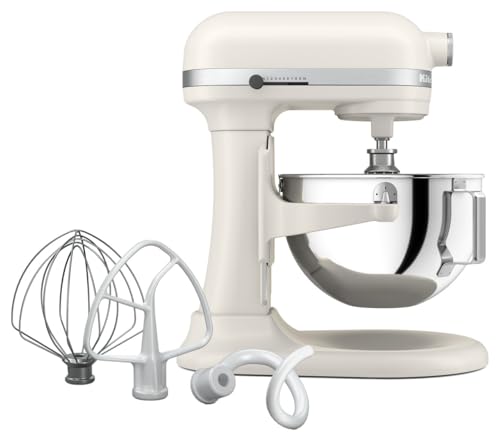
KitchenAid 5.5 Quart Bowl-Lift Stand Mixer
The smallest bowl lift, and the cheapest way to get the stiffer frame without going to seven quarts.

Ankarsrum Original AKM 6230 Stand Mixer
The bowl turns and the tool stays put, which is a completely different mechanism to a planetary mixer and lasts decades.
Prices when last checked. They change often.
Frequently asked questions
Can I make bread dough in a general purpose stand mixer like the Artisan?
A tilt-head machine can knead small amounts of dough, but dense bread and pizza dough is exactly the kind of heavy, sustained load where the frame flex at a tilt-head's hinge becomes more noticeable, and where a bowl-lift frame or a rotating-bowl design like the Ankarsrum tends to hold up better over time. For slice-by-slice guidance on dough hydration, kneading time, and which capacity actually handles dough well, see the dedicated guide on PizzaOvenCalc rather than general capacity numbers here.
Does the Ankarsrum come with a dough hook like a planetary mixer does?
It uses a roller and scraper setup instead of a hook, which works with its rotating-bowl mechanism rather than against it, since the bowl itself brings the dough to a stationary tool. This is a genuinely different way of handling dense mixtures than a planetary hook moving through a fixed bowl, and it is one of the main reasons the Ankarsrum has a following for heavy, repeated use beyond what this general purpose guide covers.
Is a bowl-lift mixer worth buying if I only mix small, light batches?
Usually not. A tilt-head mixer like the Artisan handles small and light batches, whipped cream, mashed potatoes, everyday batters, without any of the frame flex concerns that heavy loads create, and it typically costs less and takes up less space while doing it. Bowl-lift capacity and rigidity earn their price mainly at larger volumes or denser mixtures, which is not what most general purpose, everyday mixing actually involves.
Why do two mixers that look identical have different prices?
Color and finish often move independently of the underlying machine's price on any given day, even when the mixer itself, motor, capacity, and frame, is identical. The silver Artisan and the ice blue Artisan are a common example: same model, same specifications, and a price gap that comes down to finish demand rather than anything mechanical. Check both listings before buying rather than assuming the base color is always the cheaper option.
Should I buy a stand mixer at all if I only mix occasionally?
A hand mixer covers occasional light jobs, whipped cream, a quick batch of batter, without the counter space or cost of a stand mixer, and it is a reasonable choice if mixing is infrequent and never involves a large volume at once. A stand mixer earns its keep once mixing becomes regular, involves larger batches, or involves anything dense enough that holding a hand mixer through it becomes tiring, which is the point where the capacity and frame discussion on this page starts to matter.
Do I need to clean a stand mixer differently after mixing raw meat or eggs in it?
Yes. Wash the bowl, beater, and any attachment that touched raw meat or eggs thoroughly with hot, soapy water before using the same pieces for anything else, the same way you would treat any other utensil that touched raw protein. A stand mixer bowl and beater are not self-cleaning between uses, and skipping this step risks cross-contaminating the next thing mixed in the same bowl.
Sources
Published figures, quoted as published. We do not generate our own time and temperature data.
How we research: we compare manufacturer specifications, owner manuals, published USDA and FSIS figures and recurring themes in verified owner reviews. We do not cook test batches or run instruments, and nothing here is professional food safety advice. When a figure is not published by a source we trust, we say so rather than estimate one.