Bowl-lift vs tilt-head stand mixer: which frame to buy
A bowl-lift stand mixer like the KitchenAid 7 Quart at $635.00 uses a frame that does not flex under a heavy load, while a tilt-head mixer like the KitchenAid Artisan 5 Quart at $449.99 pivots the whole head up on a single rear hinge that can flex slightly when the bowl is full and the beater is working hard. For general home mixing, whipped cream, cookie dough, and mashed potatoes, the tilt-head is easier to load and store; for large, frequent, or heavy batches, the bowl-lift's stiffer frame is worth the extra size and cost.
Buy the KitchenAid Artisan 5 Quart tilt-head at $449.99 for general home mixing: whipped cream, cookie and cake batter, mashed potatoes, and everyday cooking where the bowl tilts back for easy loading and the mixer stores under a cabinet without much clearance overhead. Buy the KitchenAid 7 Quart bowl-lift at $635.00 if you regularly run large or heavy batches, since its frame does not flex the way a tilt-head does under a full bowl and a hard-working beater, which is the structural reason bowl-lift mixers hold larger capacities without the head drifting away from the bowl over time. This page covers general mixing only. For stiff bread and pizza dough, PizzaOvenCalc covers mixer capacity and hook design for that job specifically, and for cake batter, frosting, and meringue technique, CakeDecoratingCalc covers that side, since both push mixer choice in their own directions.
What does 'bowl-lift' versus 'tilt-head' actually mean mechanically?
A tilt-head mixer, like the KitchenAid Artisan, hinges the entire motor head backward on a pivot at the rear of the machine, which lifts the beater clear of the bowl for loading and swapping attachments. A bowl-lift mixer, like the KitchenAid 7 Quart, keeps the head fixed in place and instead raises the bowl itself up a pair of fixed guide arms on either side of the base. That difference sounds cosmetic until a heavy load is in the bowl: a tilt-head's single rear hinge is the only thing holding the head at the correct distance from the bowl, and a stiff batch or a very full bowl can flex that hinge slightly under load. A bowl-lift's two-sided fixed frame has no equivalent single flex point, which is what lets it hold a heavier capacity without the beater drifting closer to or further from the bowl wall as the load changes. A third design sidesteps the tradeoff entirely: the Ankarsrum Original rotates the bowl itself on a belt-driven base while the mixing tool stays fixed, so there is no head to tilt or lift at all, at a price well above either KitchenAid style here.
Tilt-head vs bowl-lift, head to head
Capacity, frame design, and typical use separate the two head styles more than any single spec does.
| Tilt-head (Artisan, 5 qt) | Bowl-lift (7 qt) | |
|---|---|---|
| Price | $449.99 | $635.00 |
| Capacity | 5 qt | 7 qt |
| Head design | Pivots back on a rear hinge | Fixed head, bowl raises on guide arms |
| Frame under heavy load | Can flex slightly at the hinge | Stays rigid on both sides |
| Loading the bowl | Bowl stays low, easy to load | Bowl travels up into position |
| Typical use | Everyday general mixing | Frequent large or heavy batches |
Does capacity alone tell you which one to buy?
Not entirely, since the frame stiffness and the motor behind it matter as much as the quart number. The KitchenAid 5.5 Quart bowl-lift at $499.99 is the smallest bowl-lift model, and it is worth knowing about specifically because it gets you the stiffer, non-flexing frame without jumping all the way to 7 quarts or the higher price that comes with it. KitchenAid does not publish a motor wattage figure for these consumer models, but the bowl-lift design in the lineup is generally paired with the more capable motors, which is part of why the price difference is larger than the extra two quarts of bowl capacity alone would suggest. For a household of one or two people baking a couple of times a month, that extra capacity and stiffness usually goes unused; for anyone mixing multiple dozen cookies or a large batch of mashed potatoes at once, it is the reason a bowl-lift earns its size on the counter.
What about pizza dough, bread, cake batter, or frosting? Does the frame choice change for those?
This page covers general purpose mixing only, and that is intentional. Stiff bread and pizza dough put a very different, sustained load on a mixer than whipped cream or cookie batter, and the right machine and attachment choice for that job belongs on PizzaOvenCalc, which covers dough-specific capacity and hook design in more depth than a general kitchen page should. Cake batter, buttercream, and meringue have their own texture and volume concerns, from overbeating a delicate batter to holding stiff peaks, and that guidance lives on CakeDecoratingCalc. Buying a stand mixer here without knowing which of those two jobs you actually do most often is the most common reason someone ends up with the wrong size or the wrong head design for what they bake.
So which one should you actually buy?
Buy the KitchenAid Artisan 5 Quart tilt-head at $449.99 for general home mixing: it is easier to load, takes less overhead clearance, and covers whipped cream, cookie dough, and everyday cooking without the size or cost of a bowl-lift. Buy the KitchenAid 7 Quart bowl-lift at $635.00 if you mix large or heavy batches often enough that frame flex under load has actually bothered you on a smaller machine, or if you are cooking or baking for a large household regularly. Consider the 5.5 Quart bowl-lift at $499.99 as the middle option: the stiffer frame without the largest capacity or price. If your real question is about kneading bread dough or whipping meringue, answer that question on PizzaOvenCalc or CakeDecoratingCalc first, since either one will point you to a different size than a general mixing comparison like this one.
Gear that fits these numbers
Everything mentioned on this page

KitchenAid 7 Quart Bowl-Lift Stand Mixer
Bowl lift rather than tilt head, which is the structural difference that lets it take a heavy load without the head flexing.
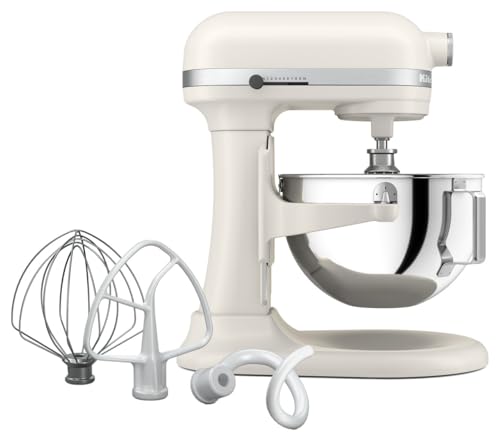
KitchenAid 5.5 Quart Bowl-Lift Stand Mixer
The smallest bowl lift, and the cheapest way to get the stiffer frame without going to seven quarts.

Ankarsrum Original AKM 6230 Stand Mixer
The bowl turns and the tool stays put, which is a completely different mechanism to a planetary mixer and lasts decades.
Prices when last checked. They change often.
Frequently asked questions
Does a tilt-head mixer's flex actually cause a problem for normal baking?
Rarely, for typical loads like cookie dough, cake batter, or whipped cream. The flex in a tilt-head's rear hinge becomes noticeable mainly under sustained heavy loads, like a large or stiff batch, where the beater can drift slightly out of position relative to the bowl over the course of mixing. For general home baking at normal batch sizes, most people never notice it.
Is a 7 quart bowl-lift mixer overkill for a household of two?
For most households of one or two people, yes. A 5 quart tilt-head comfortably handles a double batch of cookies or a standard cake, and the extra capacity of a 7 quart bowl-lift mostly goes unused. It becomes worth the size and cost for households that regularly bake in bulk, cook for a crowd, or make large batches of mashed potatoes or whipped cream at once.
How much more does a bowl-lift mixer typically cost than a comparable tilt-head?
In this lineup, the jump from the 5 quart Artisan tilt-head at $449.99 to the 7 quart bowl-lift at $635.00 is a little over $185, and even the smallest bowl-lift, the 5.5 quart model at $499.99, costs more than the tilt-head despite only a half quart more capacity. That gap reflects the stiffer frame and typically more capable motor rather than bowl size alone.
Can either of these mix stiff bread or pizza dough?
Both can handle occasional light dough with the right hook attachment, but this page does not cover dough-specific capacity or technique, since that is a different job from general mixing. For guidance on which mixer size and setup actually holds up to regular bread or pizza dough, see PizzaOvenCalc, which treats dough load as its own topic.
What is the Ankarsrum, and does it fit into this bowl-lift versus tilt-head comparison?
The Ankarsrum Original uses a completely different mechanism from either KitchenAid style: the bowl itself rotates on a belt-driven base while the mixing tool stays in a fixed position, rather than a beater orbiting inside a still bowl. It is neither a tilt-head nor a bowl-lift design, and it belongs in a separate comparison rather than as a third option alongside these two.
Does bowl-lift or tilt-head affect how loud the mixer runs?
Not directly. Noise on either style comes mainly from motor size and speed setting rather than how the bowl or head moves into position. A 7 quart bowl-lift working through a heavy load at a high speed will generally sound louder than a 5 quart tilt-head on a light batch, but that is a function of load and motor effort, not the frame design itself.
Sources
Published figures, quoted as published. We do not generate our own time and temperature data.
How we research: we compare manufacturer specifications, owner manuals, published USDA and FSIS figures and recurring themes in verified owner reviews. We do not cook test batches or run instruments, and nothing here is professional food safety advice. When a figure is not published by a source we trust, we say so rather than estimate one.