VEVOR chamber vacuum sealer review: the cheap way into chamber sealing
The VEVOR Chamber Vacuum Sealer, 10.2 Inch, at $219.90 is the cheapest genuine chamber sealer worth owning: a 260 watt pump and a 10.2 inch seal bar that evacuate a whole sealed box rather than sucking through a bag opening, which is what lets it seal soup and marinade that would foul an external machine.
VEVOR 10.2 in chamber is not a suction sealer with a lid: it is an entry level chamber machine, and that distinction is the entire reason to buy it. At $219.90 it costs roughly the same as a mid-range external suction sealer, but it works on a completely different principle, evacuating the whole sealed box rather than pulling air through the bag opening. That is what lets it seal a bag of soup, a marinating steak, or a batch of stock without pulling liquid into a pump and ruining the seal. This review is built from the published specifications, the printed manual, and patterns that repeat across verified owner reviews, not from time spent running the unit in a kitchen. It is the right buy for someone who cooks sous vide most weeks and wants to stop fighting an external sealer with wet food, and the wrong buy for someone who only seals dry portions a few times a month.
Who actually needs a chamber sealer instead of a suction sealer?
Anyone who marinates meat before sealing it, batch cooks stock or soup, or runs sous vide most weeks rather than occasionally. An external suction sealer pulls air through the bag opening with a pump, and any liquid near that opening travels the same direction the air does, which is how a marinade or a ladle of stock ends up fouling the seal or the pump itself. The mechanical difference between the two types is worth reading before buying either one, because the decision comes down almost entirely to what you plan to seal, not brand preference.
- Seals soup, brine, and marinated cuts without a mess, because the pump never touches the bag opening
- Uses smooth chamber pouches, which cost less per bag than the embossed film an external sealer requires
- Larger footprint: it sits on the counter permanently rather than living in a drawer
What do the published specifications actually mean?
The manual lists a 260 watt sealing pump and a 10.2 inch seal bar, both modest numbers next to the step-up chamber machines on this site, and both adequate for a household rather than a butcher counter. A 10.2 inch bar closes a standard quart or gallon chamber pouch without trouble, but it will not close the widest bags some larger cuts need, which is where the wider bar on the step-up VEVOR 320 earns its higher price.
| Specification | Value |
|---|---|
| Seal bar length | 10.2 in |
| Sealing power | 260 W |
| Type | Chamber, evacuates whole box |
| Price | $219.90 |
| Bag type required | Smooth chamber pouches, not embossed roll stock |
Can it actually seal liquids without a mess, and is that safe?
Yes, with one caveat that is physics rather than a flaw in this particular machine: vacuum lowers the boiling point of a liquid. At around 95 percent vacuum, the level most chamber sealers pull, water boils near 90 F instead of 212 F. A hot soup or a warm marinade will visibly bubble and can boil right out of the bag during the cycle. The fix is simple and applies to every chamber sealer, not just this one: chill liquids in the refrigerator before sealing them, and never seal anything straight off the stove. The chamber sealer cycle calculator accounts for this when estimating cycle time for wet contents.
How does it compare to the step-up VEVOR and the Avid Armor?
The three chamber machines worth cross-shopping at this price point differ mainly in bar length and build quality, not in whether they can seal liquids at all; all of them can. VEVOR 12.6 in chamber at $309.90 adds two inches of bar length and 60 more watts of sealing power, which matters if you regularly seal full width bags or run back-to-back cycles. Avid Armor USV20 at $319.00 is the more established brand in this category, with an 11.5 inch bar and a design more owner reviews describe as holding up to daily use over years rather than months.
| Model | Seal bar | Price |
|---|---|---|
| VEVOR 10.2 in chamber | 10.2 in | $219.90 |
| VEVOR 12.6 in chamber | 12.6 in | $309.90 |
| Avid Armor USV20 | 11.5 in | $319.00 |
What maintenance does a chamber sealer need that an external sealer does not?
The pump on most chamber sealers, including this one, draws through an oil reservoir, and the manual specifies an oil change interval that gets shorter the more often you seal liquids, since moisture and food vapor contaminate the oil over time. An external suction sealer has no oil at all, only a gasket and a heat strip, which is the tradeoff for not being able to seal liquids in the first place. The chamber sealer maintenance guide covers the oil change interval and the seal bar gasket in more detail, and skipping that maintenance is the most common reason an inexpensive chamber machine's pump fails early.
So who should actually buy this one?
Buy VEVOR 10.2 in chamber if you want a genuine chamber sealer at the lowest price that still does the job: sealing soup, marinated meat, and sous vide bags without the liquid problems an external sealer has. Step up to VEVOR 12.6 in chamber if you regularly need a wider bag or plan to run long sealing sessions, and step up to Avid Armor USV20 if you would rather pay slightly more for the brand with the longer track record in home kitchens. Skip a chamber machine entirely, and buy an external sealer instead, if you seal dry portions a few times a month and rarely touch liquids: the price gap will not pay for itself at that frequency.
Gear that fits these numbers
Everything mentioned on this page

VEVOR Chamber Vacuum Sealer, 12.6 Inch
The longer seal bar is about bag width, not power: a 12.6 inch bar takes a full width bag that a 10 inch machine cannot close.
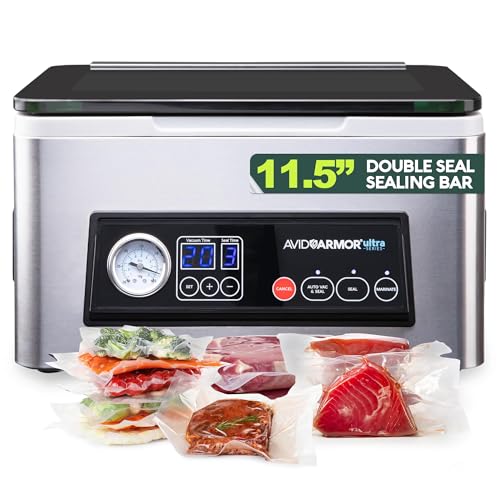
Avid Armor USV20 Chamber Vacuum Sealer
A chamber machine evacuates the whole box rather than sucking through the bag opening, which is the only way to seal soup, brine or a marinating steak without a mess.

Gasbye Chamber Vacuum Sealer, 5.3 Quart
Double seal and a replaceable bar. Double sealing matters most on liquids, where a single weld is the thing that fails weeks later in the freezer.
Prices when last checked. They change often.
Frequently asked questions
Does the VEVOR chamber sealer come with bags?
Most listings include a small starter set of chamber pouches to get a new owner through the first few seals, but it is not enough for regular use. Chamber machines need smooth pouches rather than the embossed roll stock an external sealer uses, since there is no pump pulling air through the bag opening that would need channels to travel through. Budget for a box of chamber pouches in the same order as the machine itself.
Can this machine seal soup or a wet marinade without leaking?
Yes, that is the entire reason to buy a chamber sealer over a suction sealer. The whole bag sits inside a sealed box, so the pump evacuates the box rather than pulling air through the bag opening, and liquid inside the bag has nowhere it is being pulled toward. Chill hot liquids first, since vacuum lowers the boiling point and a warm liquid will bubble or boil over during the cycle.
How loud is the VEVOR chamber sealer during a cycle?
Owner reviews repeatedly describe it as noticeably louder than a countertop blender during the vacuum pull, which typically runs for several seconds to under a minute depending on the cycle setting. It is not a background appliance you run while on a phone call in the same room. This is consistent with most chamber sealers at this price, since the oil pump is the loudest component and cheaper units use a less insulated housing around it.
What is the real difference between the 260 and the 320 watt VEVOR models?
The 320 watt model has a 12.6 inch seal bar against the 260 watt model's 10.2 inches, and the extra wattage shortens the vacuum pull slightly on a full chamber. The bar length is the number that actually changes what you can seal: a 12.6 inch bar closes a full width bag that a 10.2 inch bar cannot. If you routinely seal wide cuts like a whole salmon side, the wider model earns its higher price.
Does the oil in a chamber sealer need to be changed, and how often?
Yes. The pump draws air through an oil reservoir, and that oil degrades faster when the machine regularly seals liquids, since moisture and food vapor contaminate it over cycles. The printed manual specifies an interval, and skipping it is the most common reason an inexpensive chamber pump fails within the first year or two. A household sealing liquids weekly should check the oil more often than the manual's default interval assumes.
Is a chamber sealer this cheap actually worth it over a good external sealer?
It depends entirely on what gets sealed. If liquids, marinades, or batch cooked stock are a regular part of the kitchen, yes: an external sealer simply cannot handle that reliably, and this is the lowest priced machine that can. If sealing is mostly dry portions of meat and vegetables a few times a month, an external sealer costs less and does that job just as well, and the chamber machine's extra counter space and oil maintenance are not worth taking on.
Sources
Published figures, quoted as published. We do not generate our own time and temperature data.
How we research: we compare manufacturer specifications, owner manuals, published USDA and FSIS figures and recurring themes in verified owner reviews. We do not cook test batches or run instruments, and nothing here is professional food safety advice. When a figure is not published by a source we trust, we say so rather than estimate one.